

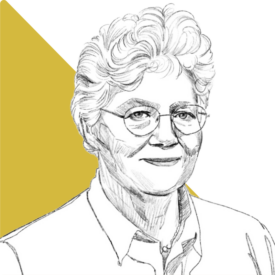
Anne L´Huillier
Attosecond Physics
Nobel Laureate in Physics 2023
Lund University
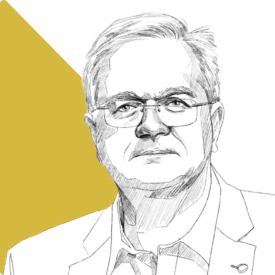
Brian Schmidt
Astrophysics
Nobel Laureate in Physics 2011
The Australian National University

Ginés Morata
Developmental Genetics
Prince of Asturias Award 2007
CBM CSIC – Universidad Autónoma de Madrid
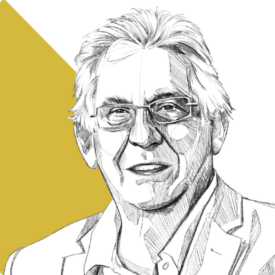
Pedro Miguel Etxenike
Condensed Matter Physics
Prince of Asturias Award 1998
DIPC, Euskal Herriko Unibertsitatea (EHU)
- Encounters with Students in DonostiaEncounters in Donostia
- Plenary lecturesAttosecond physics
The first to film the dance of electrons
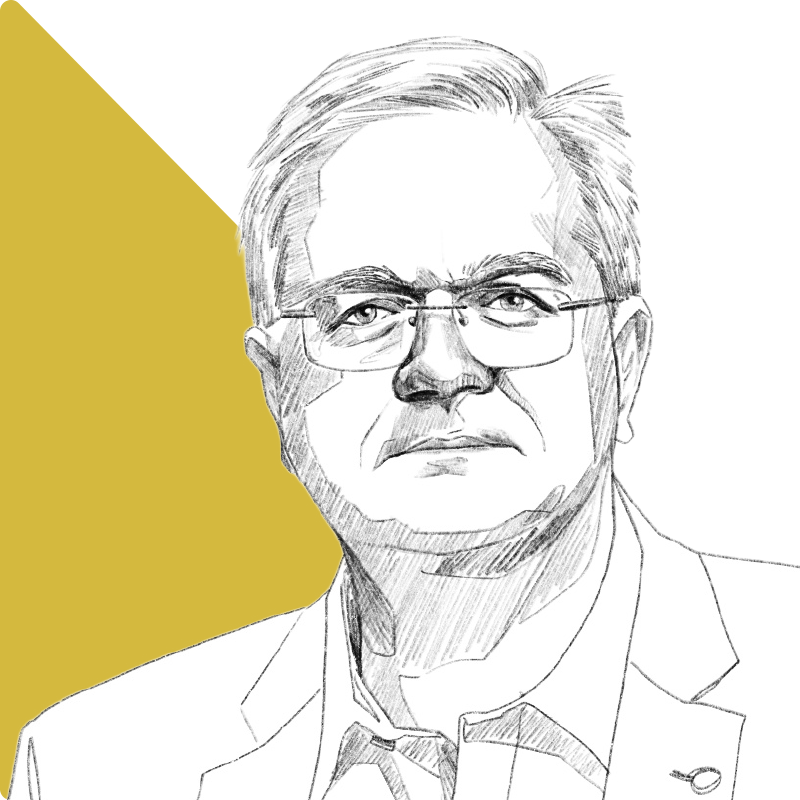
Anne L’Huillier was awarded the 2023 Nobel Prize in Physics, jointly with Pierre Agostini and Ferenc Krausz, for the development of experimental methods that generate attosecond pulses of light to study the dynamics of electrons in matter. This French-Swedish physicist is one of the founders of attosecond science, a field that makes it possible to observe the motion of electrons inside atoms and molecules. An attosecond (10⁻¹⁸ seconds) is an almost unimaginably short interval of time: one billionth of a billionth of a second. By creating flashes of light on this scale, scientists can follow processes that were previously too fast to be measured.
Her research focuses on high-order harmonic generation in gases. When intense laser light interacts with atoms, it can produce a series of very high frequencies that can be combined into extremely short pulses. L’Huillier helped explain this phenomenon and turn it into a reliable experimental method, opening a new window onto the dynamics of matter.
These tools allow researchers to investigate how electrons move, how chemical bonds begin to change and how electronic processes influence the behaviour of materials. Attosecond physics is therefore important not only for fundamental science, but also for future developments in electronics, photonics, chemistry and the control of quantum systems.
Career and recognitions
L’Huillier began her career at the Commissariat à l’Énergie Atomique in Saclay, France, first as a doctoral student and later as a permanent researcher. She completed her PhD in 1986 and carried out postdoctoral work at Chalmers University of Technology in Gothenburg and at the University of Southern California. She was also a visiting scientist at Lawrence Livermore National Laboratory.
In 1995 she moved to Lund University in Sweden, where she became a full professor in 1997 and established an internationally recognised research group. The 2023 Nobel Prize in Physics, which she received jointly with Pierre Agostini and Ferenc Krausz, recognized this body of research, which transformed an abstract timescale into a practical tool for observing the microscopic world.
- Encounters with Students in DonostiaEncounters in Donostia
- Plenary lecturesAstrophysics
The supernova hunter who detected the accelerating universe
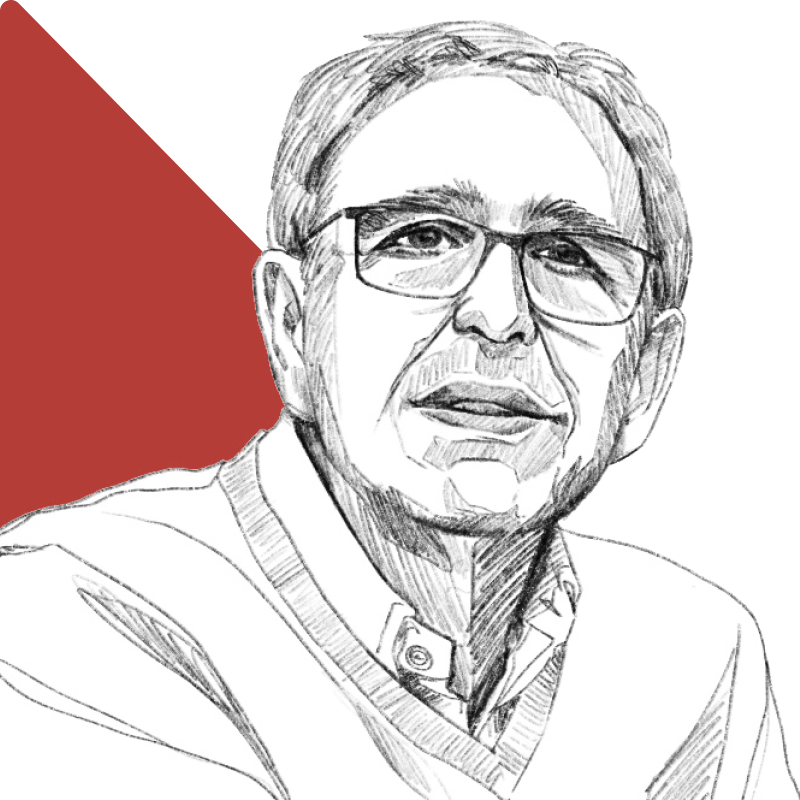
Brian Schmidt is Distinguished Professor of Astronomy at the Australian National University and 2011 Nobel Prize in Physics, with Adam Riess and Saul Perlmutter, for the discovery of the accelerating universe. As leader of the High-Z Supernova Search Team, he helped discover that the expansion of the universe is accelerating instead of slowing down under the effect of gravity, as expected.
The discovery was made by studying distant Type Ia supernovae, stellar explosions whose brightness can be used to estimate cosmic distances. By comparing how bright these explosions appeared with how quickly their host galaxies were moving away, Schmidt and his colleagues found evidence that the expansion of space has accelerated over billions of years.
This unexpected result led to the modern concept of dark energy, the name given to the still poorly understood component that appears to drive cosmic acceleration. It reshaped cosmology and raised new questions about the origin, composition and ultimate future of the universe. Schmidt has also worked on gamma-ray bursts, gravitational-wave transients, exoplanets, metal-poor stars and other major areas of observational astronomy.
Career and recognitions
Born and raised in Montana and Alaska, Schmidt completed degrees in astronomy and physics at the University of Arizona in 1989. He received a master’s degree in astronomy in 1992 and a PhD from Harvard University in 1993. After a fellowship at the Harvard-Smithsonian Center for Astrophysics, he joined the Australian National University in 1995, where he is Distinguished Professor of Astronomy.
For the discovery of the accelerating universe, he shared the 2011 Nobel Prize in Physics with Adam Riess and Saul Perlmutter. His other distinctions include the Shaw Prize in Astronomy, the Gruber Prize in Cosmology and the Breakthrough Prize in Fundamental Physics, shared with colleagues from the High-Z team. From 2016 to 2023 he served as Vice-Chancellor and President of the Australian National University, combining scientific research with institutional leadership.
- Encounters with Students in DonostiaEncounters in Donostia
Discovering how cells build, repair and compete
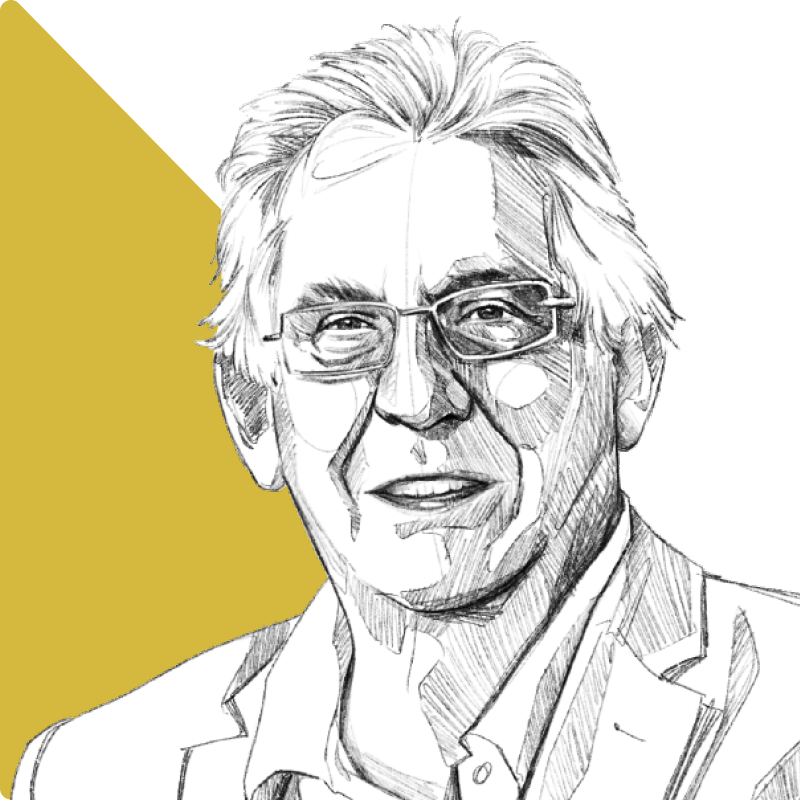
Ginés Morata is a Spanish developmental biologist whose research has advanced significantly our understanding of how genes control the formation, maintenance, and regeneration of animal tissues. His work has been carried out in the fruit fly Drosophila melanogaster, a model organism that has proved indispensable for uncovering the genetic principles underlying animal development.
One of Morata’s major contributions was the discovery and genetic analysis of developmental compartments—groups of cells that generate discrete regions of the body and maintain lineage-restricted boundaries throughout development. Together with Peter Lawrence, he demonstrated that selector genes, such engrailed, specify the identity of these compartments. His research also clarified the function of the Hox genes—a family of master regulatory genes that determine the identity of different parts of the body along the head-to-tail axis. By showing how these genes interact with developmental compartments, Morata helped explain how a common genetic blueprint generates the diverse structures of the animal body.
In 1975, together with Pedro Ripoll, Morata discovered cell competition, a quality-control mechanism by which more fit cells selectively eliminate neighbouring cells with lower fitness. First identified in Drosophila tissues, cell competition is now recognised as a fundamental biological process involved in tissue homeostasis, ageing, regeneration and cancer in all metazoans, including humans.
It protects the organism by eliminating undesirable cells, but under certain conditions the same mechanism can stimulate tumour growth. Morata’s subsequent research has also made significant contributions to the understanding of programmed cell death, revealing how signals released by dying cells stimulate the growth and regeneration of surrounding tissues.
Career and recognitions
Born in Rioja, Almería, in 1945, Morata studied Biological Sciences at the Complutense University of Madrid and completed his doctorate there in 1973 under Antonio García-Bellido. He carried out postdoctoral research at the Medical Research Council Laboratory of Molecular Biology in Cambridge with Peter Lawrence. In 1977 he returned to Spain and joined the Severo Ochoa Centre for Molecular Biology, a joint institute of the Spanish National Research Council and the Autonomous University of Madrid.
Morata received Spain’s Santiago Ramón y Cajal National Research Award in 2002 and shared the 2007 Prince of Asturias Award for Technical and Scientific Research with Peter Lawrence. He was elected a Foreign Member of the Royal Society of London in 2017 and an International Member of the United States National Academy of Sciences in 2018. In recognition of his outstanding scientific career, the Royal Academy of Sciences of Spain awarded him the Echegaray Medal in 2025.
- Encounters with Students in BIlbaoEncounters in Bilbao
- Encounters with Students in DonostiaEncounters in Donostia
- Plenary lecturesFrom a life in science: Interview with Jean-Marie Lehn
The physicist who put science at the heart of a country
Pedro Miguel Etxenike is a physicist whose career combines research in condensed-matter physics with the creation of scientific institutions and a strong commitment to public service. His research focuses on how electrons and other particles behave in solids and at surfaces, contributing significantly to our understanding of the properties of materials at the microscopic level.
Over several decades, Etxenike has contributed to the international development of materials physics while helping to build a scientific ecosystem in the Basque Country. He sees science not only as a source of knowledge, but also as a driving force for cultural and social progress, capable of strengthening education, innovation and the long-term development of a country.
This vision is reflected in the institutions he helped create. He was involved in the founding of the Materials Physics Center and CIC nanoGUNE, and was the driving force behind the creation of Donostia International Physics Center, which opened in 2000. Since then, DIPC has become an internationally recognized center that brings together cutting-edge research, a diverse scientific community, training opportunities for new generations of researchers, and outreach activities that promote public engagement with science.
Career and recognitions
Born in Isaba, Navarre, Etxenike graduated in Physical Sciences from the University of Navarre in 1972. He obtained PhDs from the University of Cambridge and the Autonomous University of Barcelona, and later was awarded the title of Doctor of Science by the University of Cambridge. He has supervised 27 doctoral theses, published more than four hundred scientific papers, and delivered invited lectures at institutions and conferences across Europe, the Americas and Japan. He is Emeritus Professor at the University of the Basque Country (EHU).
He served as Minister of Education in the first Basque Government and later as Minister of Education and Culture and government spokesperson. From these positions, he promoted research, science and technology, and helped advance the Law for the Normalisation of the Use of the Basque Language. His honours include the Prince of Asturias Award for Scientific and Technical Research and the Max Planck Physics Prize, as well as the Euskadi Prize for Science and the Blas Cabrera National Research Award. He is an honorary member of the European Physical Society, was the founding president of Jakiunde and remains its Honorary President. He has also received six honorary doctorates.