

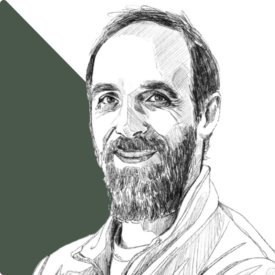
Eduardo Sáenz de Cabezón
Mathematics and Science Communication
Creator of Derivando and host of Órbita Laika
University of La Rioja
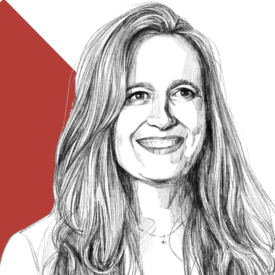
María Martinón
Paleoanthropology and Human Evolution
2019 Rivers Memorial Medal
National Research Center on Human Evolution (CENIEH)
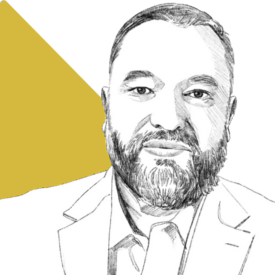
Román Orús
Quantum Computing and Artificial Intelligence
2024 Physics, Innovation and Technology Award
Ikerbasque, DIPC, Multiverse
- New voicesSwipes in a dark room. The advent of quantum computing
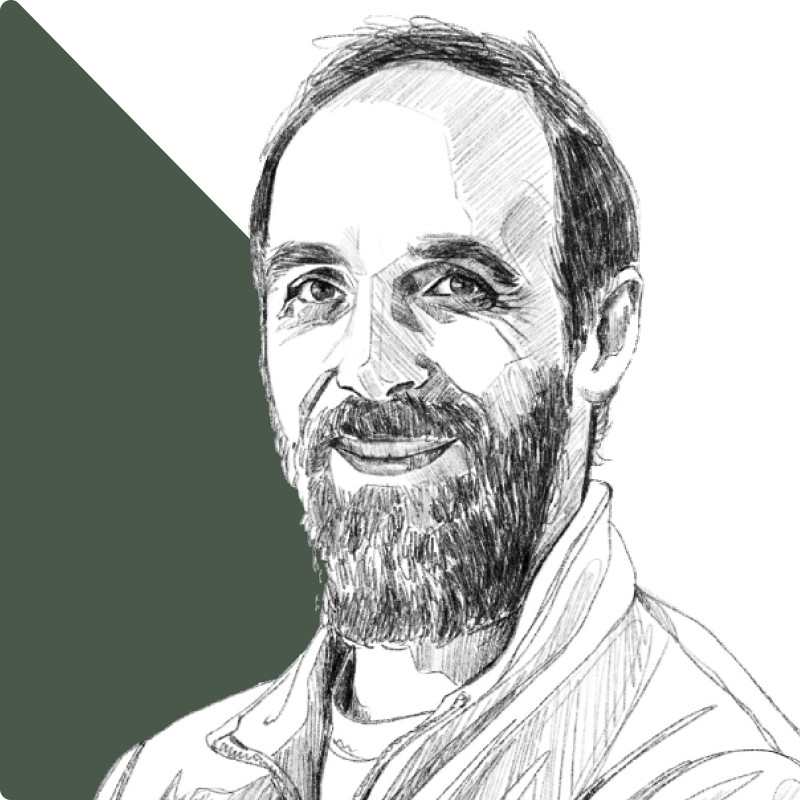
The mathematician who inspires audiences ‘derivating’
Eduardo Sáenz de Cabezón is a mathematician and science communicator who has helped make mathematics accessible to large audiences without reducing its intellectual depth. His work combines university research and teaching with television, books, podcasts, live performances and online videos that present mathematics as a creative and useful way of understanding the world.
His academic research focuses mainly on computational algebra, an area that uses algorithms and computer methods to solve problems involving algebraic structures. This field connects abstract mathematics with practical calculation and has applications in geometry, coding, optimisation and computer science.
As a communicator, Sáenz de Cabezón is known for turning apparently difficult ideas into clear stories, examples and questions. He shows that mathematics is present in technology, probability, decision-making, patterns and everyday reasoning. His style combines rigour with humour, helping audiences overcome the belief that mathematics is reserved for specialists or for people with a particular kind of talent.
Career and recognitions
Born in Logroño, Sáenz de Cabezón holds a PhD in Mathematics and is Associate Professor in the Department of Mathematics and Computing at the University of La Rioja. He works with national and international research teams and has published numerous scientific articles in computational algebra.
He created the YouTube channel Derivando, which has around one and a half million subscribers and has become one of the leading Spanish-language mathematics channels. He presents Orbita Laika on Spain’s public television channel La 2 and also communicates through books, podcasts, conferences, courses, newspapers and radio. He has received several awards in Spain and Latin America for his contribution to science communication and for bringing mathematics into contemporary popular culture.
- New voicesA dialogue on human evolution, technological development, and the future of humanity.
The detective of the origins of our species
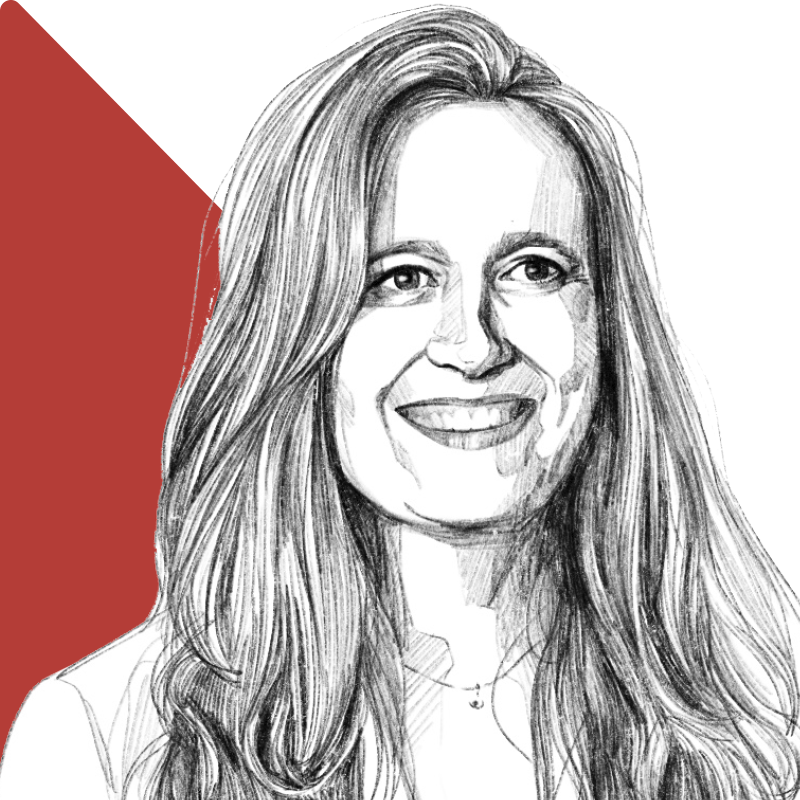
Maria Martinón-Torres is a physician and palaeoanthropologist whose research reconstructs human evolution through fossil remains, especially teeth. Teeth are among the most durable parts of the skeleton and preserve anatomical details that can reveal relationships between populations, patterns of migration, diet, development and disease.
By comparing dental evidence from Europe, Asia and Africa, Martinón-Torres has helped refine scientific interpretations of the first human populations to reach Europe and of the diversity that existed among early hominins. Her work shows that human evolution was not a simple linear progression, but a complex history of dispersal, isolation, contact and adaptation.
She has contributed to research at major sites including Atapuerca in Spain and Dmanisi in Georgia, where some of the earliest hominin remains found outside Africa were discovered. Her scientific interests also include palaeopathology, biomechanics, childhood, palaeoneurology and palaeoproteomics. Together, these approaches allow fossil remains to be studied not only as anatomical specimens, but also as evidence of how ancient humans lived, developed and responded to illness and environmental pressure.
Career and recognitions
Born in Ourense, Martinón-Torres studied Medicine and Surgery at the University of Santiago de Compostela, where she received an extraordinary degree award and completed a doctorate on the evolution of the hominin dentition. She also trained in forensic anthropology at the Complutense University of Madrid and specialised in human evolution at the University of Bristol. She joined the Atapuerca Research Team in 1998 and has since taken on a leading role, serving as co-principal investigator since 2019 and as co-director of the Atapuerca excavations since 2025. From 2007 to 2015 she led the Dental Anthropology Group at the National Research Centre for Human Evolution, CENIEH. After working at University College London, where she became Professor of Palaeoanthropology, she returned to Spain and was appointed Director of CENIEH in 2017. She remains an Honorary Professor at UCL.
In 2019 she became the first Spanish recipient of the Royal Anthropological Institute’s Rivers Memorial Medal. She is also the author of ‘Homo imperfectus’, which examines disease, vulnerability and adaptation from an evolutionary perspective.
- New voicesA dialogue on human evolution, technological development, and the future of humanity.
A pioneer in quantum algorithms and artificial intelligence
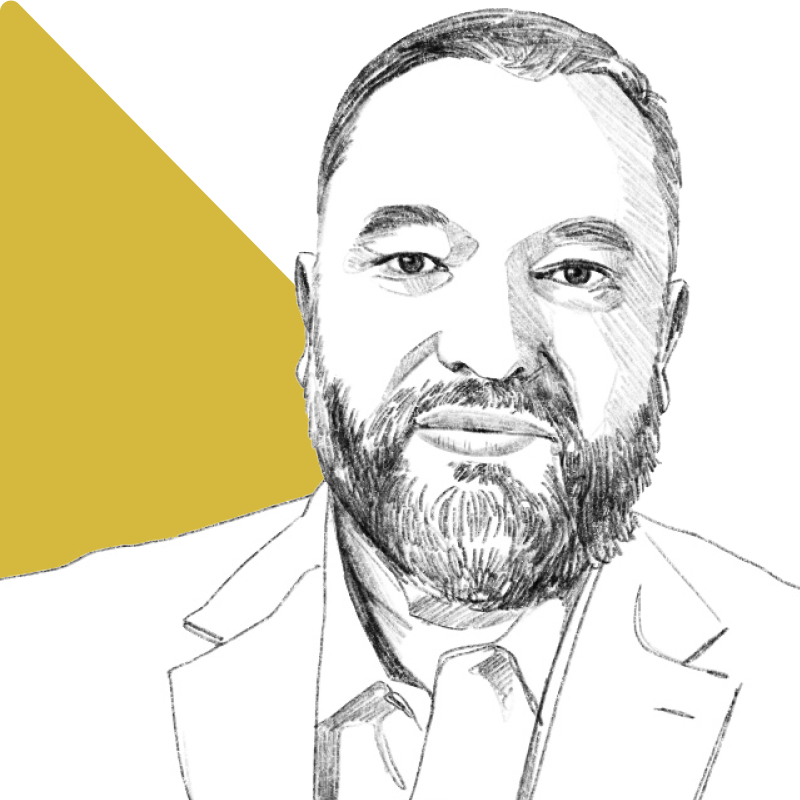
Román Orús is an Ikerbasque Research Professor at the Donostia International Physics Center (DIPC) and co-founder and Scientific Director of Multiverse Computing. This theoretical physicist and technology entrepreneur connects the mathematics of quantum systems with practical problems in computing and artificial intelligence. His research focuses on tensor networks, structures that provide an efficient way of representing extremely complex systems made up of many interacting components.
Tensor networks were originally developed to study strongly correlated quantum matter, where the number of possible states grows too quickly for ordinary computational methods. Orús has helped expand their use in condensed-matter physics, quantum information, quantum gravity and machine learning. His reviews and introductory publications have become widely used references for researchers entering the field.
The same mathematical tools can also be applied to optimisation and to reducing the size, cost and energy consumption of artificial-intelligence models. By transferring ideas from quantum physics to industrial computation, Orus works at the boundary between fundamental theory and deployable technology. His approach illustrates how concepts created to understand matter can become tools for finance, energy, manufacturing and advanced data processing.
Career and recognitions
Orús studied Physics at the University of Barcelona and completed his doctorate in 2006 under José Ignacio Latorre. He held research positions at the University of Queensland and the Max Planck Institute of Quantum Optics, later serving as a professor at Johannes Gutenberg University Mainz and as a visiting researcher in France and Spain. He is an Ikerbasque Research Professor at the Donostia International Physics Center.
In 2019 he co-founded Multiverse Computing in Donostia-San Sebastián and became its Scientific Director. The company develops quantum and quantum-inspired software for industrial applications. His honours include the European Physical Society Early Career Prize and the 2024 Physics, Innovation and Technology Award from the Spanish Royal Society of Physics and the BBVA Foundation. He is also a member of the United Nations Independent International Scientific Panel on Artificial Intelligence, contributing scientific evidence to global debate on AI’s opportunities and risks.