

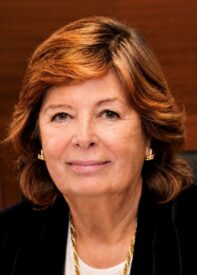
Maria Vallet
Biomaterials and Bone Regeneration
2018 Rey de Jaime I Award for Basic Research
Complutense University of Madrid
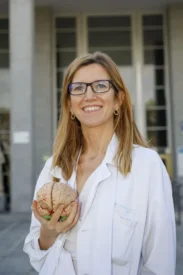
Rosa Molina
Mental health
Universidad Complutense de Madrid
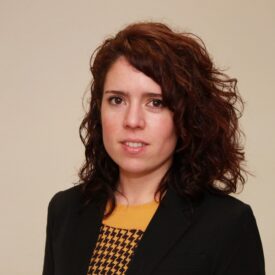
Susana Carregal
Biomedical nanomaterials
Ikerbasque, CIC biomaGUNE
- Emakumeak zientzianRound Table and questions
The bone regenerator
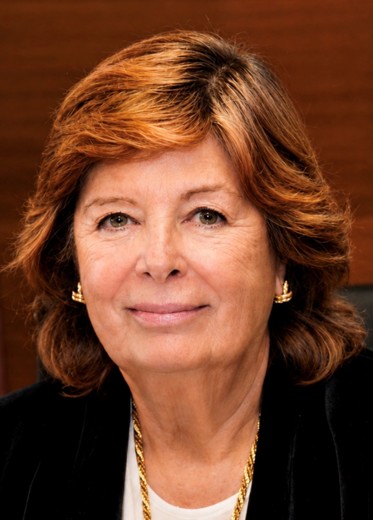
María Vallet-Regí is a pioneering researcher in the field of mesoporous ceramic materials and the scientist who discovered potential biomedical applications of these materials, particularly in the field of bone regeneration and controlled drug delivery systems. For her ground-breaking contributions in this field, she received the Rey Jaime I Award for Fundamental Research in 2018.
She is the director of the Intelligent Biomaterials Research Group (GIBI), CIBER-BBN, of the Complutense University of Madrid; this group is developing various strategies to cure bone-related diseases such as cancer, osteoporosis or implant infections.
In the case of cancer, they are using silica nanoparticles to transport drugs to damaged areas where the drugs are then released in a controlled manner; when the cancer cells are detected, the nanoparticles are activated by external stimuli, such as ultrasound, and the drug that kills the cell is released. These selective methods enable an impact to be made without damaging the surrounding healthy cells.
Similarly, nanoparticles can carry antibiotics to cure infections, or customised implants can be created using 3D printers to grow stem cells capable of regenerating bone tissue.
Career and recognitions
Born in Las Palmas de Gran Canaria, in the Canary Islands, María Vallet-Regí studied chemistry at the Complutense University in Madrid, earning her PhD at the same institution in 1974. She is currently Emeritus Professor of Inorganic Chemistry and Director of the GIBI research group at the Department of Inorganic Chemistry and Bioinorganics at the Complutense University of Madrid’s Faculty of Pharmacy.
She has written over 700 scientific papers and has 13 patents and over 38,000 citations. According to the ISI Web of Knowledge, she was the most-cited Spanish scientist in the field of Materials Science in the last two decades.
She is a full professor at the Complutense University and a numbered fellow of the Royal Academy of Engineering (RAI) and the Royal National Academy of Pharmacy (RANF). She is also a Fellow of Biomaterials Science and Engineering at the International College of Fellows of Biomaterials Science and Engineering (ICF-BSE) and a Fellow of the American Institute for Medical and Biological Engineering (AIMBE).
She has won many national and international prizes, including the National Research Prize in 2008, the Jaume I Prize for Basic Research in 2018, the Societé Française de Chimie’s Prix Franco-Espagnol 2000, the RSEQ 2008 Prize in Inorganic Chemistry, the FEIQUE Research Prize in 2011, the RSEQ Gold Medal in 2011, the IUPAC 2013 Distinguished Women in Chemistry/Chemical Engineering, the Miguel Catalán Research Prize in 2013, the Lilly Distinguished Career Award in Chemistry in 2016 and the Julio Peláez Prize for Pioneering Women in Physics, Chemistry and Mathematics, awarded by the Tatiana Pérez de Guzmán el Bueno Foundation in 2017. She also has a Gold Medal for Merit in Research and University Education and is Doctor Honoris Causa at the Jaume I University and the University of the Basque Country.
- Emakumeak zientzianMental health
- Emakumeak zientzianRound Table and questions
A voice communicating the science of the mind and mental health
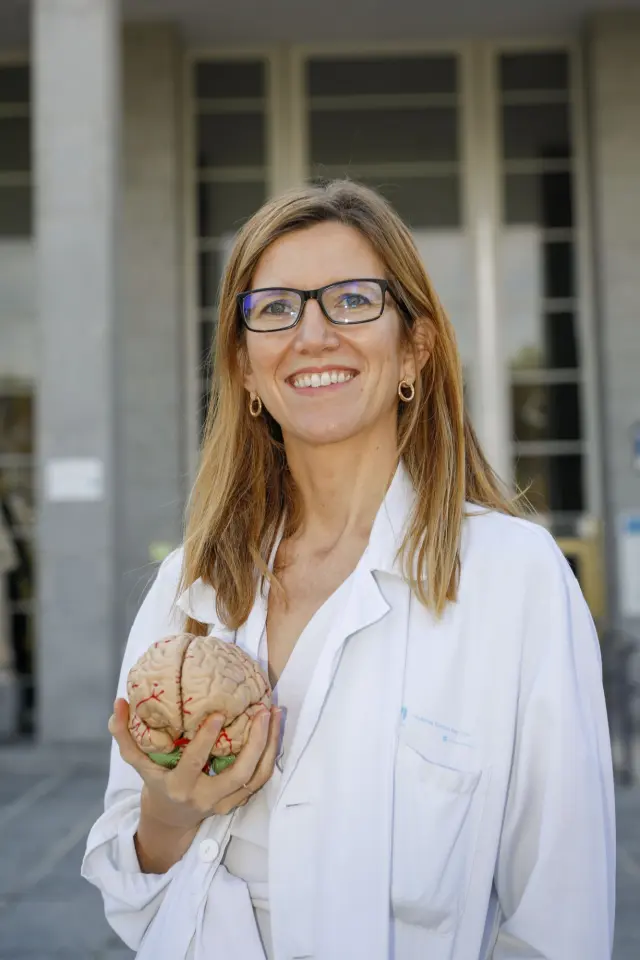
Rosa Molina is a psychiatrist, holds a PhD in Psychiatry from the Complutense University of Madrid, and is an associate professor at the same university. She works as a psychiatrist within Madrid’s public healthcare system, where she runs a specialist clinic focused on psychogeriatrics. Her professional activity combines patient care with teaching, research, and medical science communication.
Her work is grounded in an integrative approach to mental health, focusing on the interaction between the biological, psychological, and social factors that influence our wellbeing. Both in her clinical practice and in her communication work, she addresses issues related to the functioning of the brain and mind, emotions, behaviour, and the relationship between mental and physical health.
Molina also maintains an active international training profile and a career closely linked to research and teaching. Her interest in understanding the complexity of the human mind and behaviour is also reflected in her science communication work, through which she seeks to bring scientific knowledge about mental health to non-specialist audiences, contribute to a better understanding of mental illness, and help reduce the stigma that still surrounds it.
Professional career and science communication
Molina studied Medicine and completed several international training placements before specialising in Psychiatry at Hospital Clínico San Carlos in Madrid. She subsequently obtained a PhD in Psychiatry from the Complutense University of Madrid, with a thesis focused on structural and functional neuroimaging in eating disorders, developed in collaboration with the University of Melbourne in Australia, where she also completed a training placement.
She currently works as a psychiatrist within Madrid’s public healthcare system and runs a specialist psychogeriatrics clinic. She combines her clinical work with teaching as an associate professor at the Complutense University of Madrid, while continuing her research activities and international training.
Her career as a medical science communicator gained particular momentum during the pandemic, when she began using social media as a tool to bring science and mental health closer to society. Through her social media profiles and the podcast De piel a cabeza, she explores topics related to the brain, emotions, behaviour, and mental health from an accessible and approachable perspective.
She is the author of the books Una mente con mucho cuerpo (2021) and Tus microtraumas (2023), published by Paidós, an imprint of Grupo Planeta. She has also been a regular contributor to RNE and RTVE, taking part in a range of radio and television programmes.
Her clinical, teaching, research, and science communication work seeks to bring scientific knowledge about mental health closer to society and promote a broader, more integrative understanding of wellbeing, grounded in scientific knowledge and in an appreciation of the complexity of the human mind and behaviour.
- Emakumeak zientzianRound Table and questions
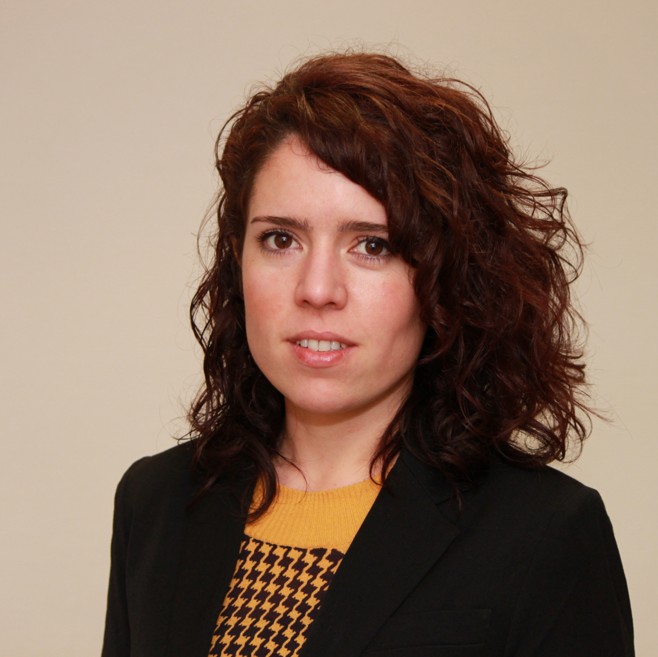
Susana Carregal Romero holds a PhD from the University of Vigo and is a Ramón y Cajal Researcher and Ikerbasque Research Fellow at CIC biomaGUNE in San Sebastián. She is a member of the Biomedical Research Networking Center for Respiratory Diseases (CIBERES) and the European Society for Molecular Imaging.
Her work focuses on the development of multifunctional nanomaterials capable of interacting with biological systems to improve the diagnosis and treatment of diseases. Her research explores how nanoparticles behave in the body and how they can be designed for innovative biomedical applications.
She is particularly interested in chronic diseases such as pulmonary fibrosis, a serious condition that affects respiratory function. As a principal investigator, she leads several research projects aimed at developing more effective and precise nanomedicines for the treatment of this disease, including BiomTher, NanoSurf, and LUNG-GENEMED.
Her goal is to help translate advances in nanotechnology into new therapeutic strategies capable of improving patients’ quality of life.