

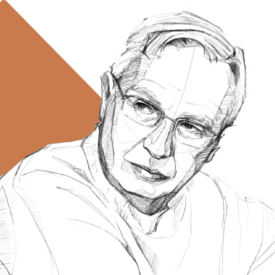
Jean-Marie Lehn
Supramolecular Chemistry
Nobel Laureate in Chemistry 1987
Université de Strasbourg
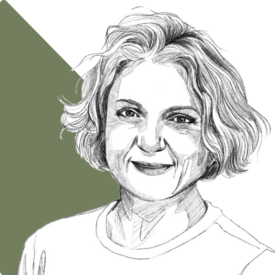
Sandra Myrna Díaz
Biodiversity and Climate Change
Princess of Asturias Award 2019
National University of Córdoba
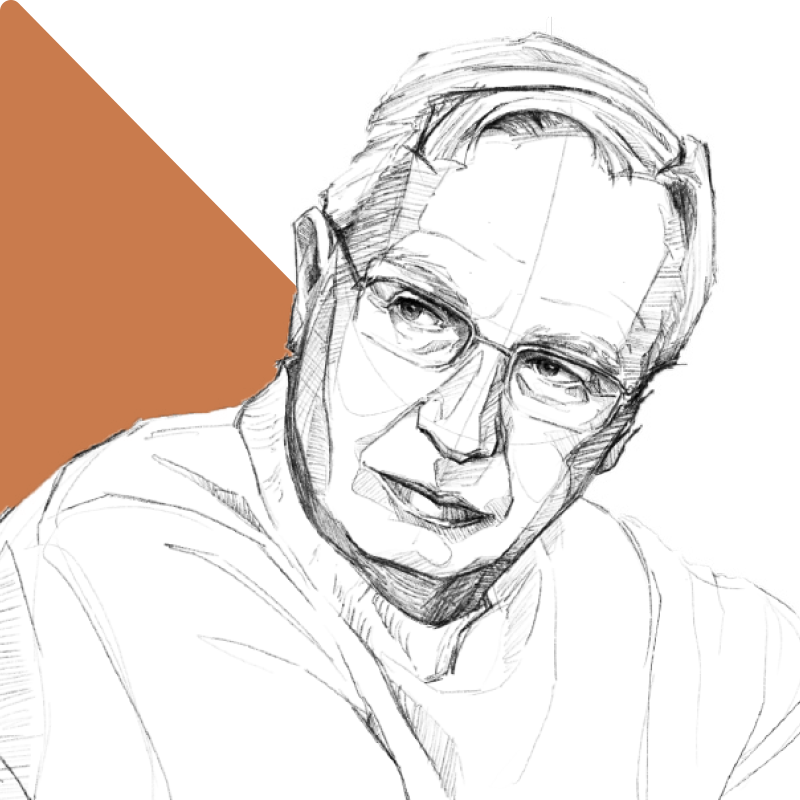
- Plenary lecturesFrom a life in science: Interview with Jean-Marie Lehn
- PhD TrainingWorkshop: Scientific Discovery in the Era of AI
The father of supramolecular chemistry
Born in France, Jean Marie Lehn shared the Nobel Prize for Chemistry with Charles J. Pedersen and Donald J. Cram, for his studies on the chemical basis of ‘molecular recognition’ (i.e., the way in which molecules recognize and selectively bind to each other), which also plays a fundamental role in biological processes. Over the years his work led him to the definition of a new field of chemistry, for which he has proposed the term ‘supramolecular chemistry’ as it deals with the complex entities formed by the association of two or more chemical species held together by non-covalent intermolecular forces. Subsequently, the area developed into the chemistry of “self-organization” processes and more recently towards ‘adaptive chemistry’, dynamic networks and complex systems.
Lehn studied chemistry at the University of Strasbourg, earning his PhD in 1963 in the laboratory of Guy Ourisson. He then spent a year in Robert Burns Woodward’s laboratory at Harvard University, where he was part of the team working on the total synthesis of vitamin B12. He also took a course in quantum mechanics and began carrying out his first calculations with Roald Hoffmann. In 1964 he witnessed the first steps in what would later be known as the Woodward–Hoffmann rules.
Career and recognitions
In 1966 he became a lecturer at the University of Strasbourg and set up his own laboratory, where he focused his work on physical organic chemistry, putting the experience gained in organic chemistry, quantum theory and physical methods espacially NMR into practice. In 1970 he was appointed Professor of Organic Chemistry at the Louis Pasteur University of Strasbourg and from 1979 to 2010 he was Professor at the Collège de France in Paris. He is presently Professor at the University of Strasbourg Institute for Advanced Study (USIAS).
Author of over 1000 scientific publications, Lehn is a member of many academies and scientific institutions and has received, in addition to the Nobel Prize, many international awards, including the Humboldt Prize (1983), the Royal Society’s Davy Medal (1997) and the ISA Medal for Science (2006). He received the Order of Merit of the Federal Republic of Germany in 2009 and was named Grand Officer of the French Legion of Honour in 2014, among other accolades.
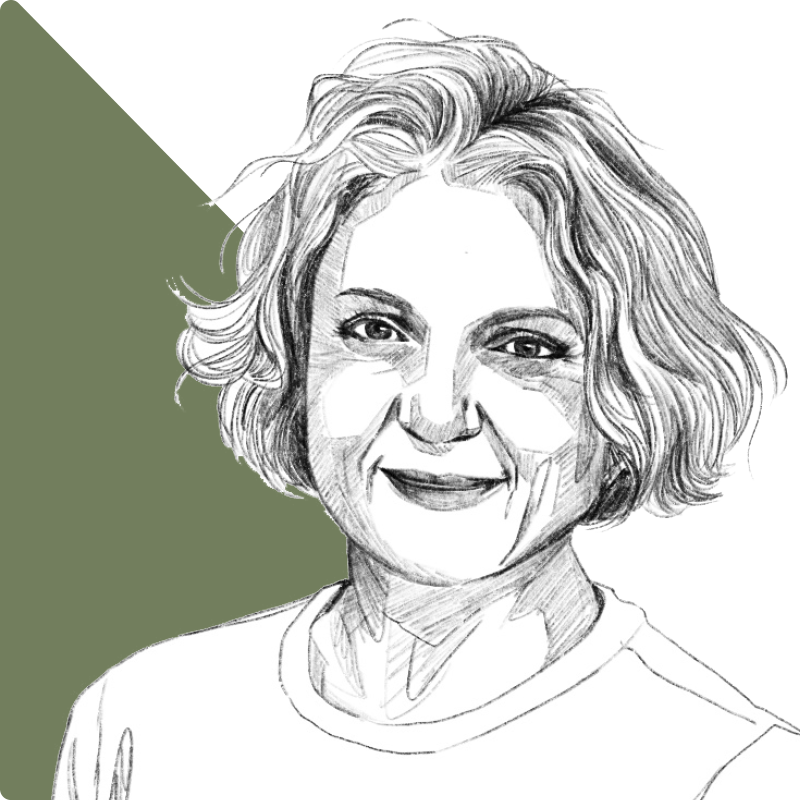
- Plenary lecturesBiodiversity and climate change
- PhD TrainingWorkshop: Scientific Discovery in the Era of AI
The defender of the “web of life” in the face of the climate crisis.
Sandra Díaz is an Argentine biologist and one of the world’s leading specialists in ecology and biodiversity. Her research addresses a crucial but sometimes overlooked aspect of the environmental crisis: the way climate change, land use and other global pressures transform the plant communities on which entire ecosystems depend.
Plants sustain the web of life. They provide food, shelter, regulate water and climate, store carbon and create the conditions in which animals, including humans, can survive. Díaz has shown that understanding biodiversity requires more than counting species. It is also necessary to study their functional traits: the characteristics that determine how organisms grow, reproduce, use resources and influence their environment.
She developed the first global quantitative picture of the essential functional diversity of vascular plants, known as the global spectrum of plant form and function. Her work has shaped the theory and practical use of functional diversity and helped explain how changes in plant communities affect ecosystem properties and human quality of life. She has also promoted plural approaches to the ways different societies value nature, including the influential concept of nature’s contributions to people.
Career and recognitions
Díaz studied Biology at the National University of Córdoba, where she graduated in 1984 and completed her PhD in 1989. She is Professor of Ecology at the same university and a Senior Principal Investigator of Argentina’s National Scientific and Technical Research Council. She co-founded TRY, the global communal plant-trait initiative, and co-chaired the Global Assessment of the Intergovernmental Science-Policy Platform on Biodiversity and Ecosystem Services. She also contributed to the work of the Intergovernmental Panel on Climate Change, which was jointly awarded the Nobel Peace Prize in 2007.
Her distinctions include the Margalef Prize in Ecology, the Gunnerus Sustainability Award, the Princess of Asturias Award for Technical and Scientific Research, the BBVA Foundation Frontiers of Knowledge Award and the 2025 Tyler Prize for Environmental Achievement. She is a Fellow of the Royal Society and a member of several national academies. Her international scientific work has made her a clear and influential voice in the defence of biodiversity and in the search for fairer ways of responding to environmental change.