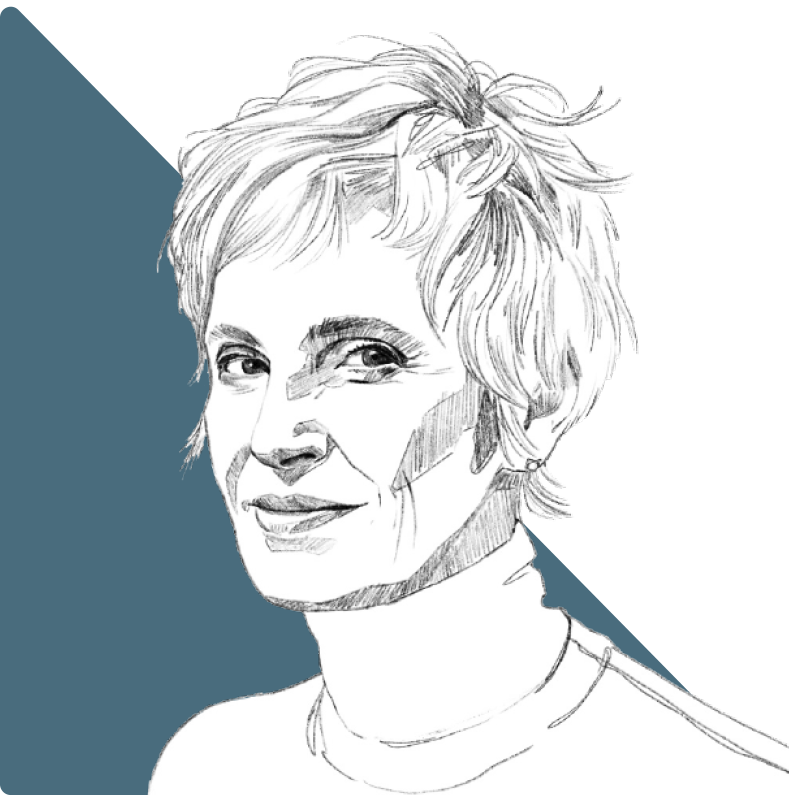
The voice of the dialogue between literature and neuroscience
Siri Hustvedt is an American novelist, essayist and scholar whose work moves between literature, visual art, philosophy, psychoanalysis, neuroscience and psychiatry. Across fiction and nonfiction, she examines how memory, imagination, emotion and the body shape personal identity and the stories people tell about themselves.
Her interdisciplinary approach challenges rigid divisions between the sciences and the humanities. Hustvedt has written extensively about the mind-body problem, neurological symptoms, perception, creativity and the ways cultural assumptions influence scientific theories. Rather than treating subjective experience as separate from biological life, she explores how language, history, relationships and physiology continually interact.
Her novels include ‘The Blindfold’, ‘What I Loved’, ‘The Summer Without Men’, ‘The Blazing World’ and ‘Memories of the Future’. Her nonfiction includes ‘The Shaking Woman’ or ‘A History of My Nerves’ and several essay collections on art, gender, cognition and psychoanalysis. ‘Ghost Stories’, published in 2026, continues her investigation of memory, presence and the unstable boundary between what is experienced and what can be explained.
Career and recognitions
Hustvedt received her PhD in English Literature from Columbia University and is a lecturer in psychiatry at Weill Cornell Medical College in New York. She has spoken at scientific and academic conferences on philosophy, neuroscience, neurology, psychiatry and literature, and has published articles in both scholarly and scientific journals. Her books have been translated into more than thirty languages.
‘The Blazing World’ was longlisted for the Man Booker Prize and won the 2014 Los Angeles Times Book Prize for Fiction. Her distinctions also include the International Gabarron Prize for Thought and Humanities, the European Essay Prize, an American Academy of Arts and Letters Award in Literature, the Sigourney Award for Psychoanalysis and the 2019 Princess of Asturias Award for Literature, which recognised the breadth and intellectual ambition of her work.