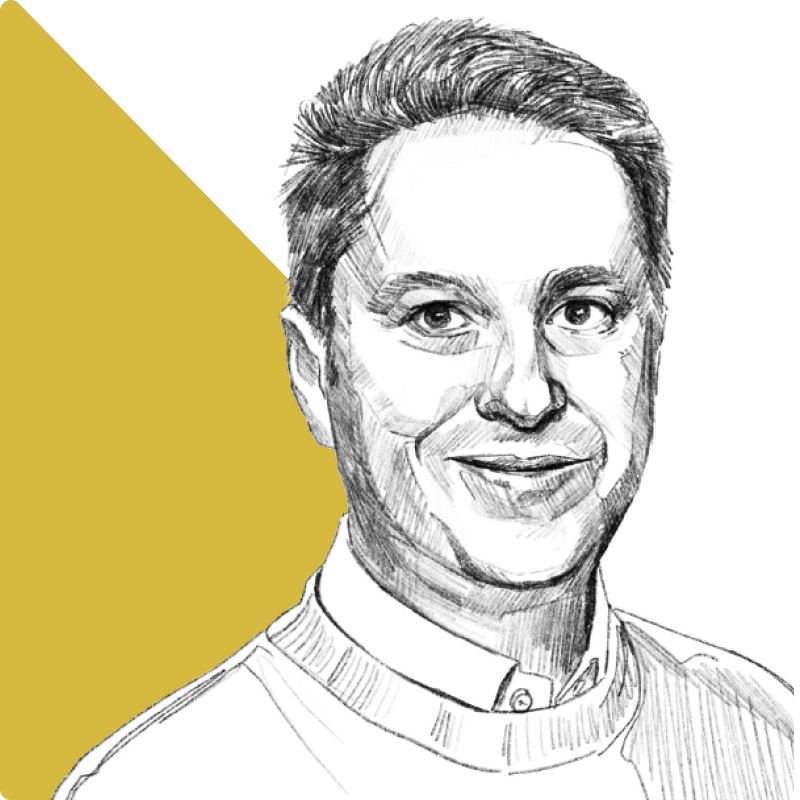
One of the visionaries behind the quantum computer
Juan Ignacio Cirac is a physicist who has proposed some of the most important ideas for applying quantum physics to computing. He is one of the minds behind quantum computers. For the past 25 years he has been one of the directors of the Max Planck Institute of Quantum Optics and is a recipient of both the Prince of Asturias Award (2006) and the Wolf Prize (2013).
His research focuses on the quantum theory of information and quantum computing. Quantum computing has a different paradigm from current computing, which is based on bits and which processes information in only two states: zero and one (on or off). Quantum technology, on the other hand, works also by superimposing these states using ‘quantum bits’, also known as qubits. One key consequence of this is that certain problems which cannot be solved by a conventional computer would be feasible for a quantum one.
Career and recognitions
Ignacio Cirac earned a degree in physics from the Complutense University in Madrid in 1988 and a PhD in 1991. After lecturing at the Universities of Castilla-La Mancha (Spain) and Innsbruck (Austria), in 2001 he was appointed director of the Max Planck Institute of Quantum Optics (Garching, Germany) and is an honorary professor at the Technical University of Munich.
He is a Fellow of the Spanish Royal Academy of Sciences, as well as the German (Leopoldina), the Bavarian and the US-American one, a correspondent member of the Austrian, Zaragoza and Barcelona Academies of Science and a Fellow of the American Physical Society. He has won many awards for his work, including the Felix Kuschenitz Prize from the Austrian Academy of Sciences in 2001, the European Physical Society’s Quantum Electronics Prize in 2005, the Prince of Asturias Prize in 2006, the Blas Cabrera National Research Prize in 2007, the BBVA Foundation’s Frontiers of Knowledge Prize in 2009, the Franklin Medal in 2010, the Niels Bohr Medal in 2013, the Wolf Prize in 2013, the Hamburg Prize for Theoretical Physics in 2015, the German Physical Society’s Max Planck Medal in 2018, the John Stuart Bell Prize of University of Toronto, the Micius Foundation’s Quantum Computer Prize (China) in 2019, the 2024 Prize of the Royal Belgium Academy and the CSIC Medal of Excellence in 2025. He holds ten honorary degrees.