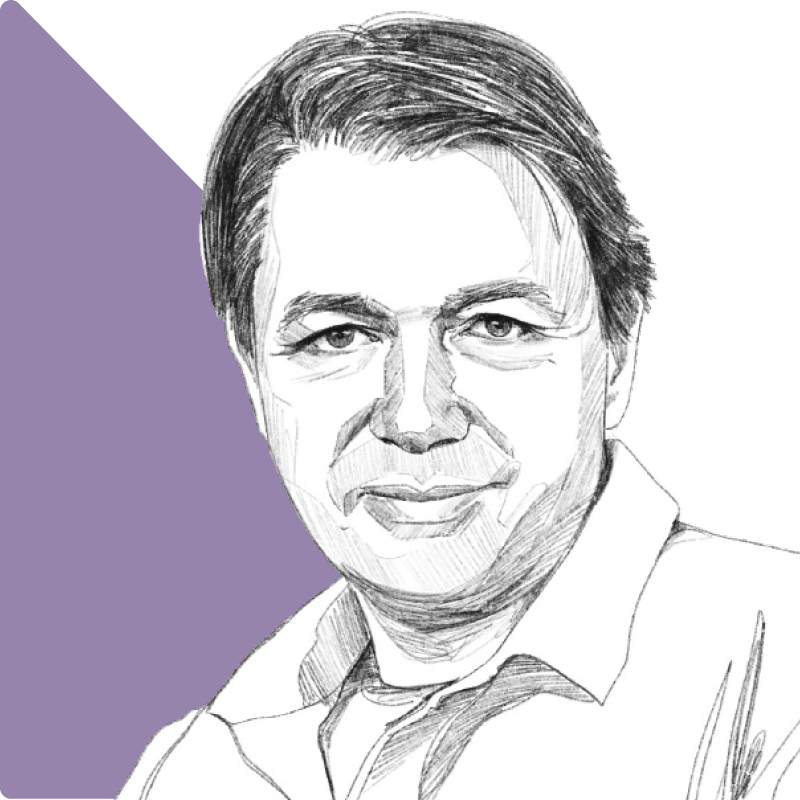
The scientist who teaches machines to understand human language
Eneko Agirre is a computer scientist whose research focuses on natural language processing, the branch of artificial intelligence that enables machines to analyse and generate human language. His work examines how computers can identify meaning, distinguish between different senses of a word and connect language with the knowledge and context needed for real understanding.
Human language is full of ambiguity. The same word can express different ideas depending on the sentence, while the same idea can be expressed in many different ways. Agirre has developed methods for lexical semantics, word-sense disambiguation and semantic representation that help computational systems move beyond surface-level matching and interpret what speakers and writers intend.
His research also contributes to language technologies for minority and lower-resourced languages, including Basque. By combining linguistic knowledge, large-scale data and machine-learning methods, his work supports applications such as search engines, translation, question answering and conversational artificial intelligence. It also helps evaluate whether language models are learning meaningful relationships or merely reproducing statistical patterns.
Career and recognitions
Agirre is Full Professor of Informatics at the University of the Basque Country (EHU) and Head of the HiTZ Basque Center for Language Technology in San Sebastián. He has been a visiting researcher or professor at New Mexico State University, the University of Melbourne, the University of Southern California, Stanford University, New York University and the University of Edinburgh.
He is a Fellow of the Association for Computational Linguistics (ACL) and a member of Jakiunde, the Basque Academy of Sciences, Arts and Letters. He has served as President of ACL’s SIGLEX, co-founded the Joint Conference on Lexical and Computational Semantics and worked on the editorial boards of leading journals. He received the SCIE-BBVA Foundation National Computer Science Award in 2021, three Google Research Awards and six best-paper awards or nominations, most recently at ACL 2024. Doctoral theses completed under his supervision have also received major European and Spanish awards.