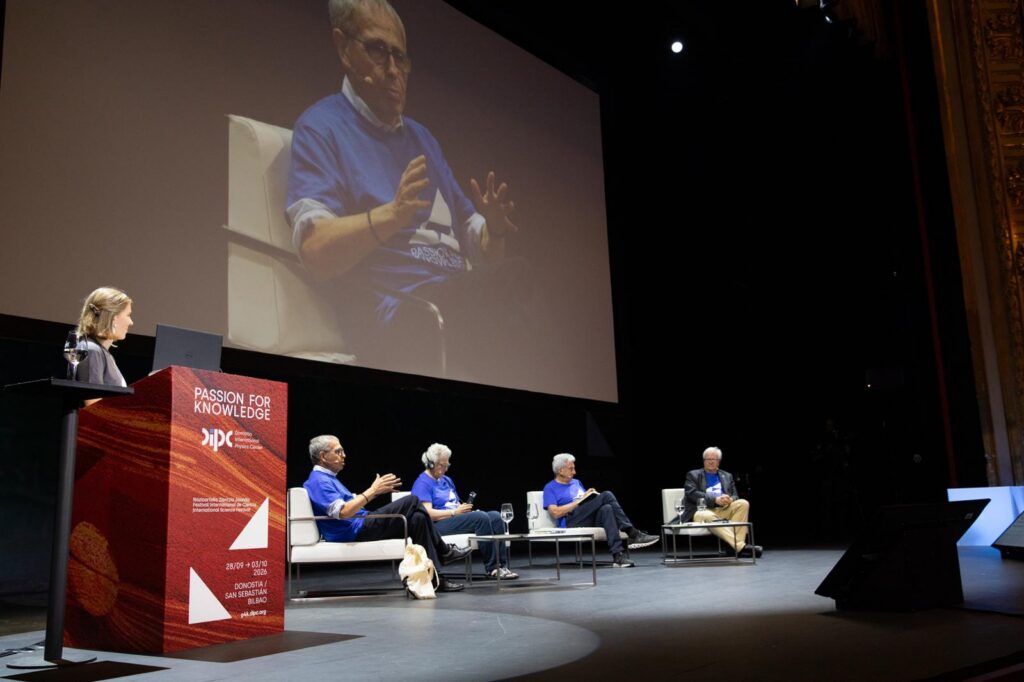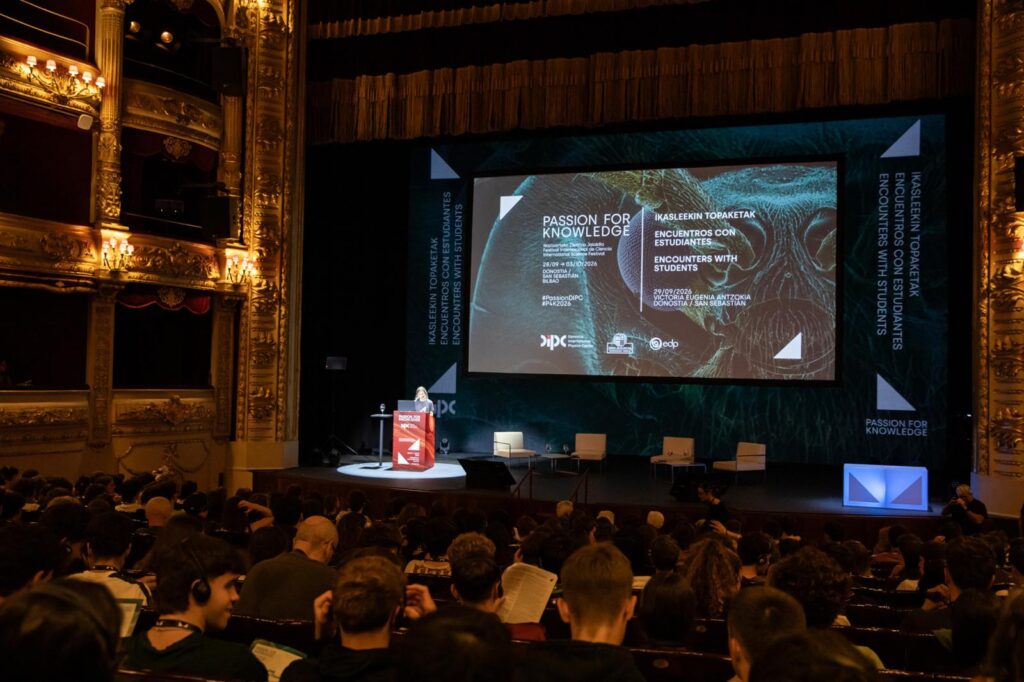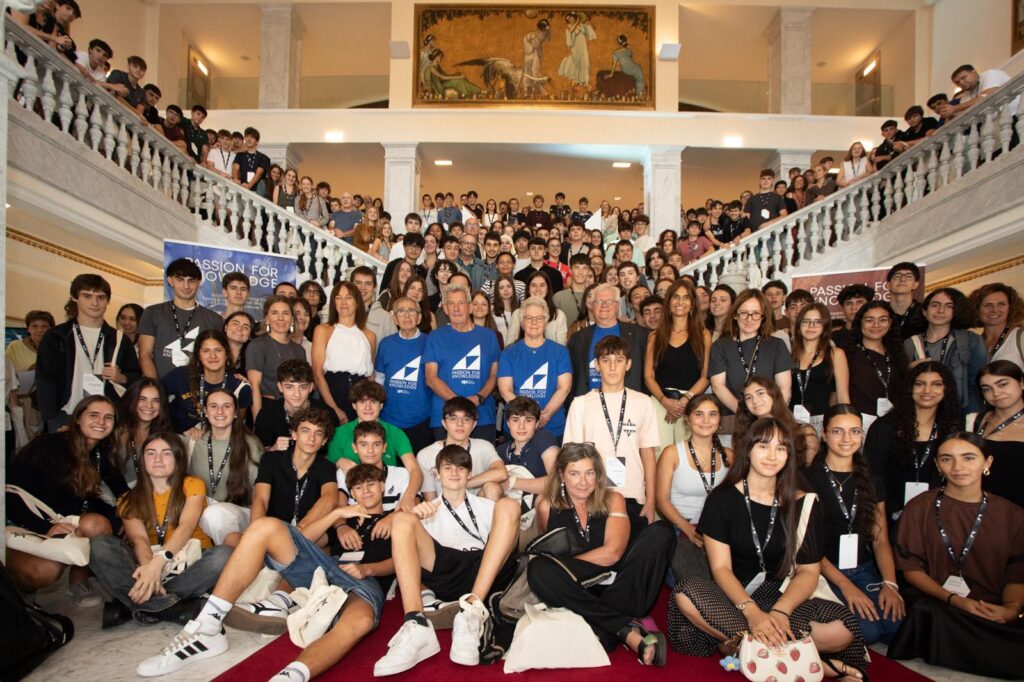

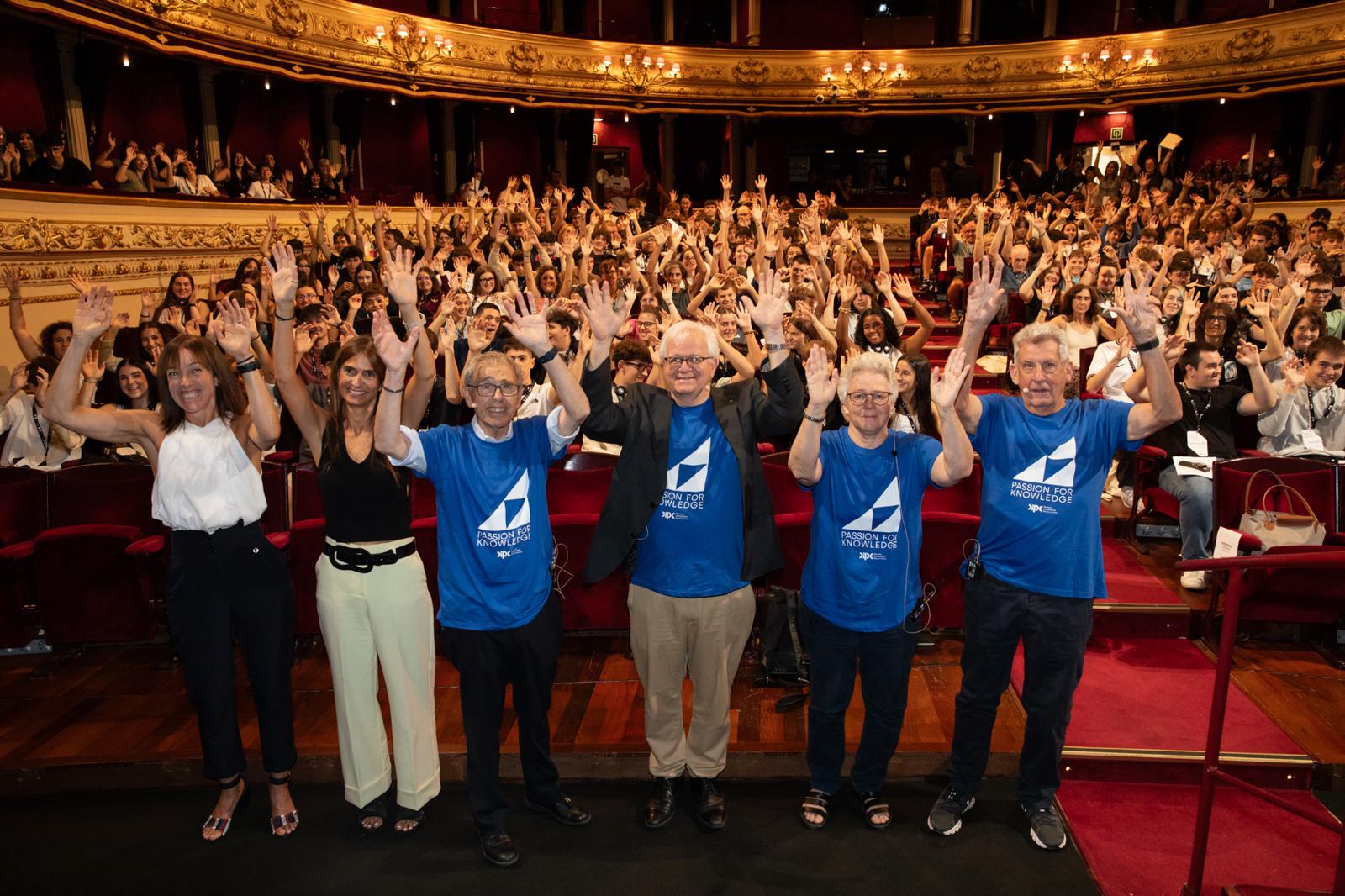
As part Passion for Knowledge, the Victoria Eugenia Theatre in Donostia hosted the ‘Zientziarekin solasean!’ encounters this morning, an initiative that brought together secondary school pupils and teachers with three leading international scientists: Anne L’Huillier, winner of the 2023 Nobel Prize in Physics; Brian Schmidt, winner of the 2011 Nobel Prize in Physics; and Ginés Morata, winner of the 2007 Prince of Asturias Award for Scientific and Technical Research.
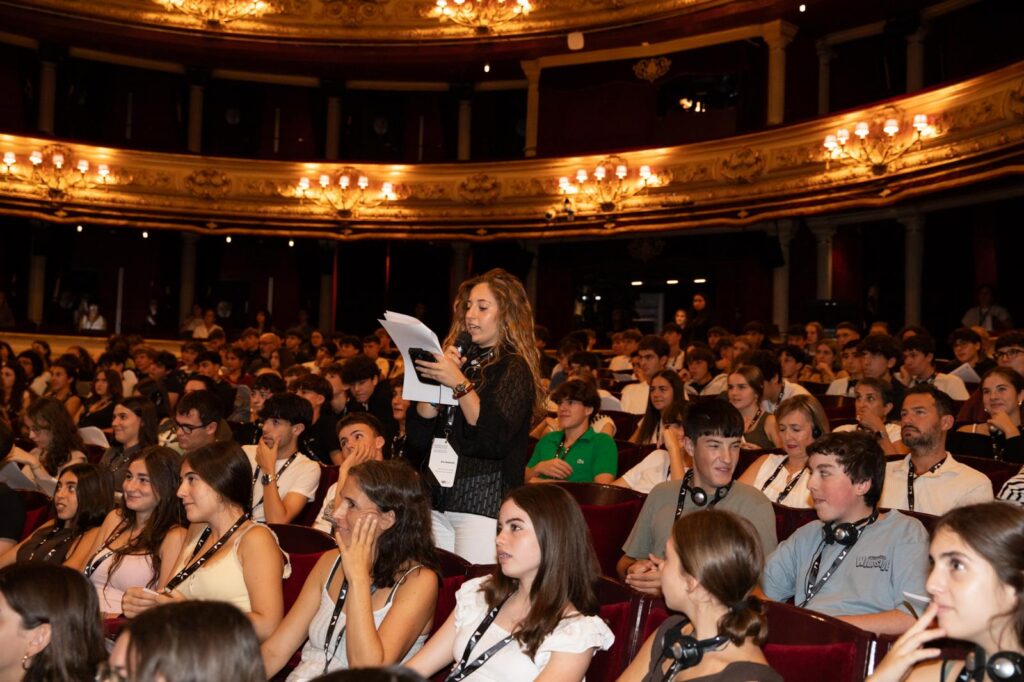
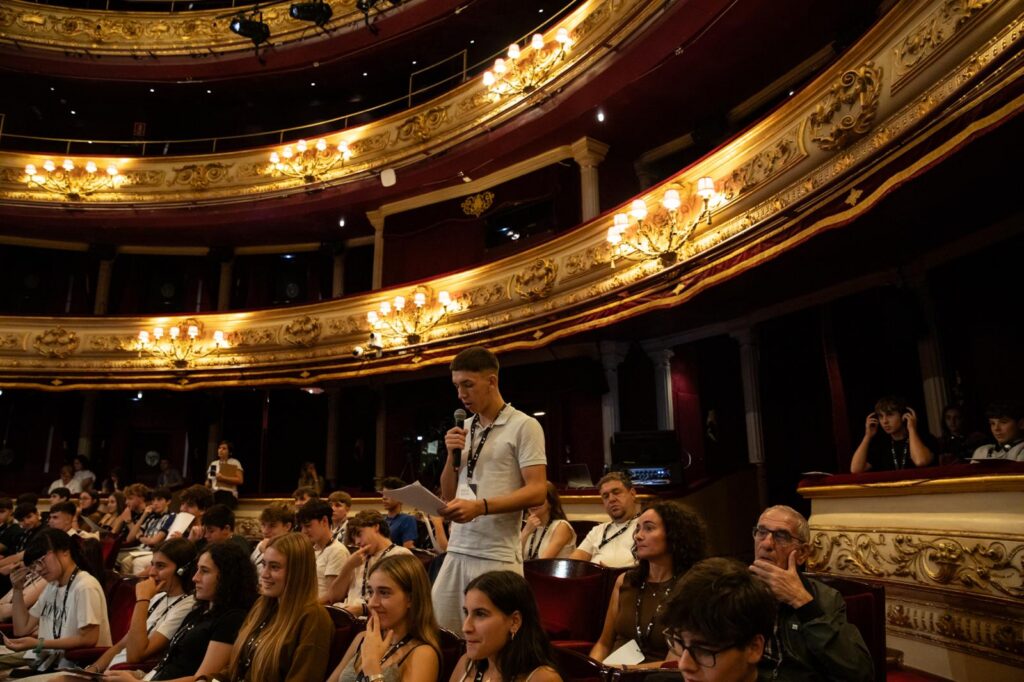
The main aim of these sessions, organised by the Donostia International Physics Centre (DIPC), is to spark an interest in science amongst young people and inspire them to pursue scientific careers. Throughout the morning, the pupils had the opportunity to learn first-hand about the careers of the three guest speakers, discover some of the challenges that have shaped their research and, above all, ask them questions directly.
Beyond their discoveries, the three guests shared with the pupils some of the moments, lessons learnt and experiences that have shaped their respective scientific careers, offering an intimate insight into research and the people behind major scientific breakthroughs. The session was moderated by Pedro Miguel Etxenike.
One of the morning’s most eagerly awaited moments came with the announcement of the event’s most interesting or original question. The award ultimately went to Yahya Tamimi, from the Koldo Mitxelena BHI school in Vitoria-Gasteiz, for his question: ‘In the 19th century, scientists believed in the existence of the luminiferous ether, which turned out to be an illusion due to a lack of better physics. Do you think dark energy could be our 21st-century ‘ether’, a mathematical illusion because we might not understand gravity on very large scales? The announcement, made by Izaskun Simon on behalf of EDP Foundation, sparked excitement and nerves amongst the audience, closing this event marked by curiosity and a thirst for knowledge.