Author: csadmin

  • Passion for Knowledge is back ─ science meets citizens!

    Passion for Knowledge is back ─ science meets citizens!

    The international science festival Passion for Knowledge (P4K) returns this year to bring together some of the most prominent voices in science, culture and contemporary thought in a new edition open to the general public. Organised by the Donostia International Physics Center (DIPC), this sixth edition of the festival will take place from 28 September to 3 October 2026 and is aimed at bringing knowledge closer to society and to championing science as an essential part of our culture.

    The festival will once again gather leading international figures from the world of science, including several Nobel Prize winners, leaders in their respective areas of research, who have been at the forefront of some of the most important advances and discoveries over the last few decades. The now-traditional plenary sessions will allow participants to get closer to the frontiers of knowledge and discover first-hand how research transforms how we understand reality.

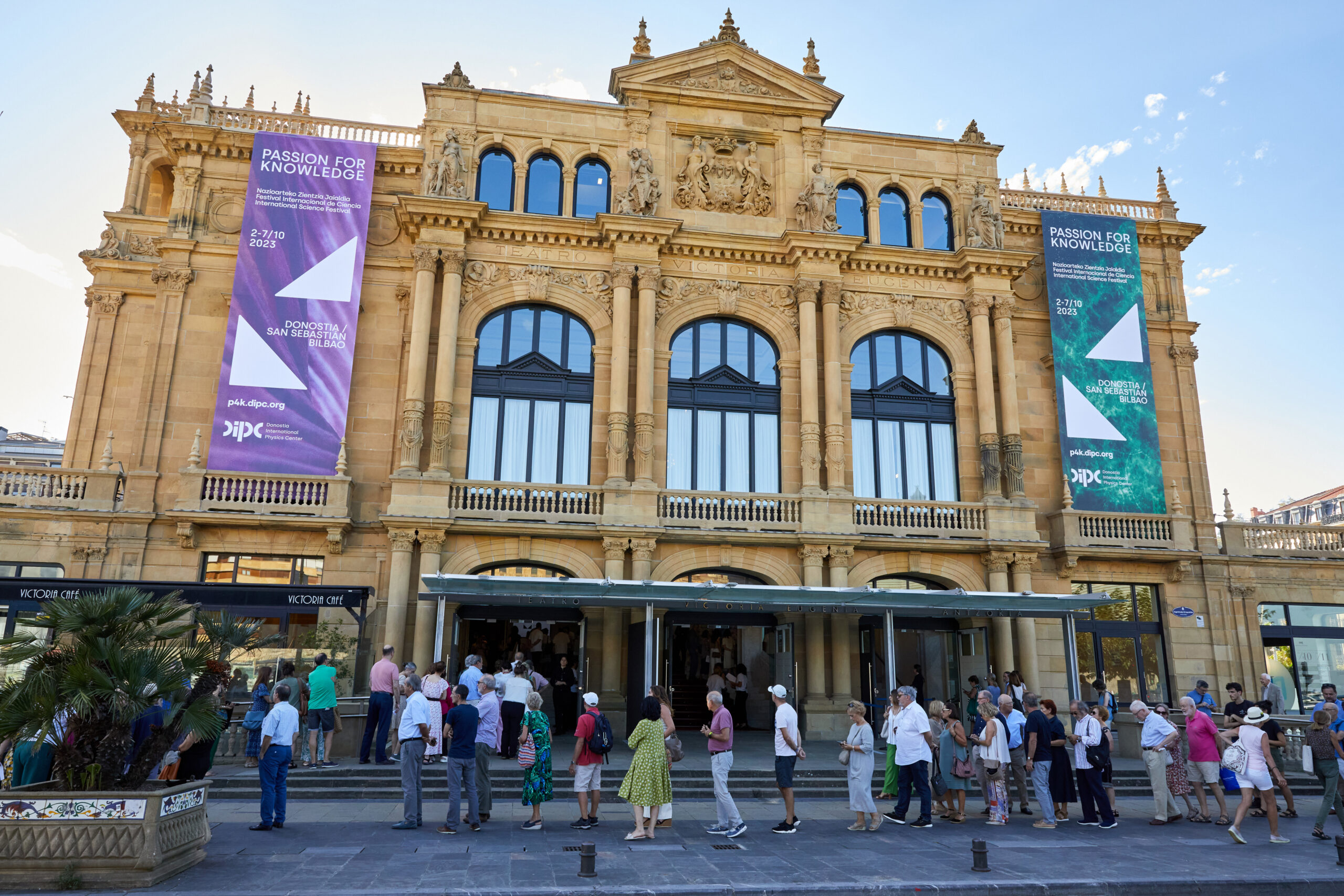
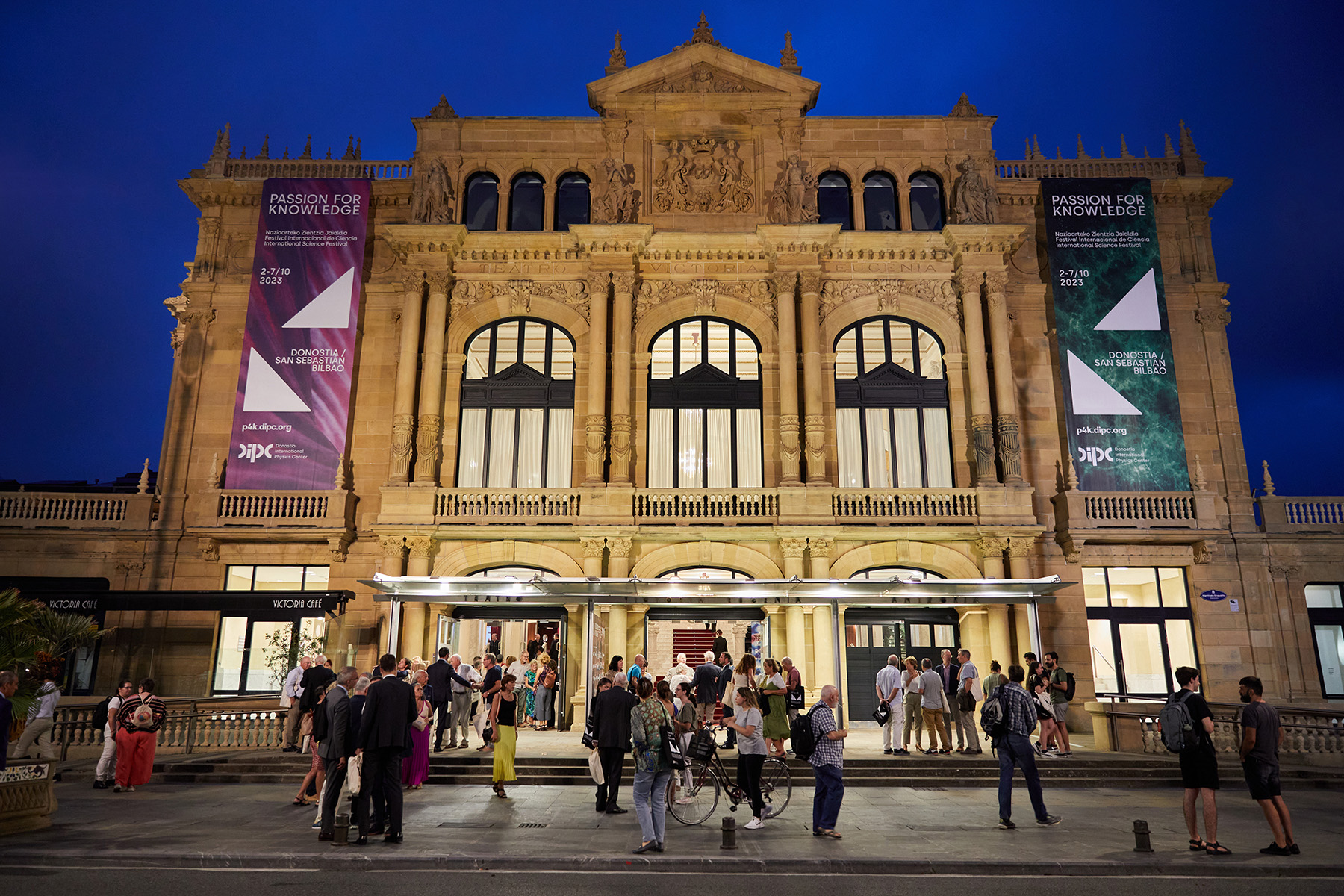
    The Victoria Eugenia Theatre in San Sebastián will again be the main venue for this international event, which will also offer activities in Bilbao. The programme combines the plenary sessions with activities for all types of audiences: meetings with secondary school students, Naukas sessions, children’s workshops, shows, dissemination activities with content creators, etc.

    We will soon be sharing details about this exciting programme of activities lined up for Passion for Knowledge 2026!

    Subscribe to our newsletter to stay up to date with the latest news:
    Newsletter

  • Passion for Knowledge 2023 ends successfully

    Passion for Knowledge 2023 ends successfully

    The 2023 Passion for Knowledge festival has mobilized around 10,000 people. An average of 800 attendees have come to the Victoria Eugenia Theatre every day. 500 secondary school students and teachers have also had the chance to chat to top-level scientists. The two lectures at the Euskalduna Palace in Bilbao and the company CAF in Beasain also reached full capacity. The festival has also had high media coverage: more than 150 interviews have been given and many of them have been broadcast nationwide.

    Once again, the DIPC would like to thank all the people who have been Involved for months In the preparation for an event like this to take place. And of course, to all the members of the public for the exceptional response they have given by coming day after day to the Victoria Eugenia theatre and displaying their interest in science and knowledge. This is undoubtedly the best incentive to continue organizing events of this type. See you at the next edition of Passion for Knowledge!

    Once again, the DIPC would like to thank all the people who have been Involved for months In the preparation for an event like this to take place. And of course, to all the members of the public for the exceptional response they have given by coming day after day to the Victoria Eugenia theatre and displaying their interest in science and knowledge. This is undoubtedly the best incentive to continue organizing events of this type. See you at the next edition of Passion for Knowledge!

  • Encounters in Donostia

    Encounters in Donostia

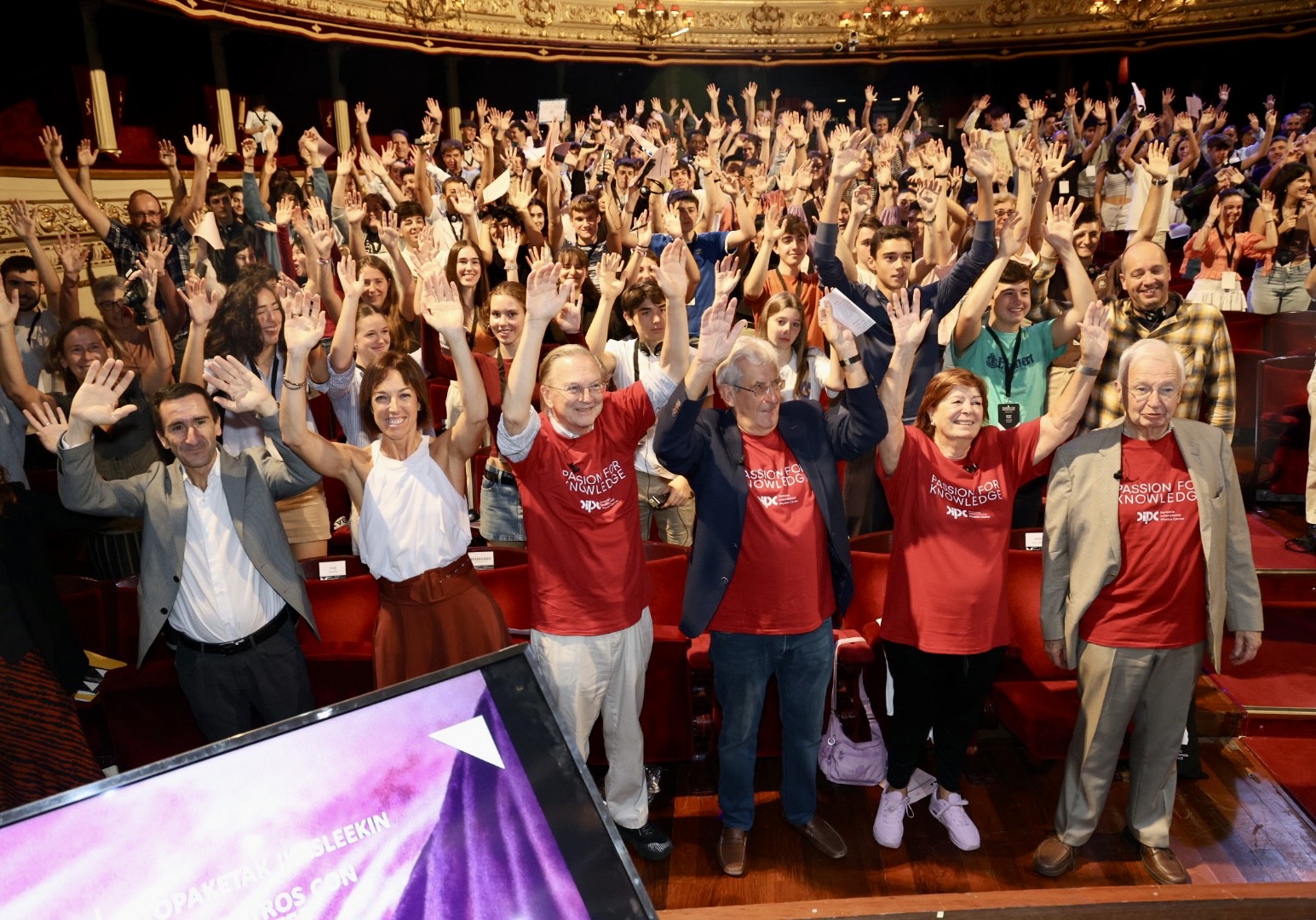
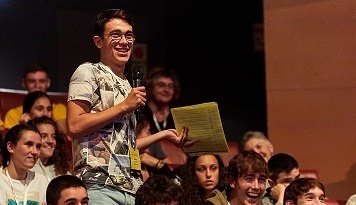
    The 13th top@DIPC – Zientziarekin solasean! Encounters took place today in Donostia- San Sebastián (Victoria Eugenia Theatre). The meeting offered 175 students and 55 teachers from 44 secondary schools the chance to chat with Nobel laureates Jean Marie Lehn and Jack Szostak, and Rey Jaime I Award for Fundamental Research María Vallet Regí in a relaxed, friendly atmosphere, and to ask them questions.

    The main aim of the encounters is to awaken young people’s curiosity in relation to science and to inspire them to pursue a career in this field. To this end, students study the life and work of the scientists they would meet beforehand in class. During the event, all participating schools had the opportunity to ask questions thanks to an entertaining draw system.

    The three researchers talked about their passion for science and research and answered the questions asked by students, sharing details about their lives and experiences throughout the course of their professional careers alongside Pedro Miguel Etxenike who acted as host and chair.

    The main aim of the encounters is to awaken young people’s curiosity in relation to science and to inspire them to pursue a career in this field. To this end, students study the life and work of the scientists they would meet beforehand in class. During the event, all participating schools had the opportunity to ask questions thanks to an entertaining draw system.

    The three researchers talked about their passion for science and research and answered the questions asked by students, sharing details about their lives and experiences throughout the course of their professional careers alongside Pedro Miguel Etxenike who acted as host and chair.

  • Lecture at CAF

    Lecture at CAF

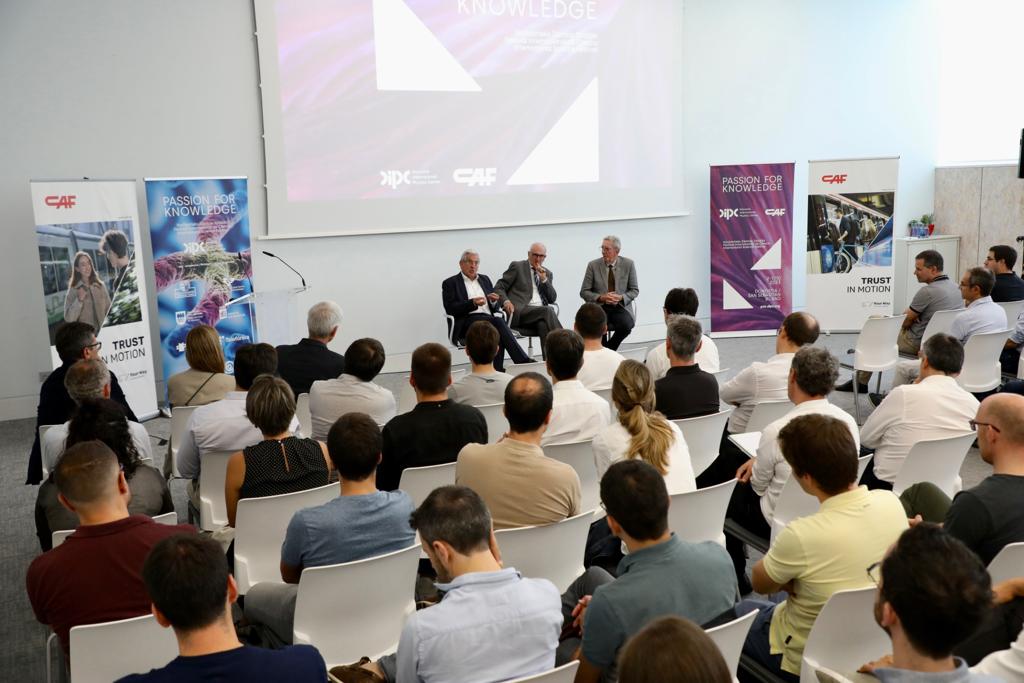
    As part of the Passion for Knowledge festival a special session has been organised at the headquarters of CAF (Construcciones y Auxiliar de Ferrocarriles), a patron of the DIPC since its earliest days. Jean-Pierre Sauvage, creator of molecular machines, has given a lecture followed by an open discussion with company employees.

    Jean-Pierre Sauvage is a French chemist who in 2016 won the Nobel Prize for Chemistry for his contributions to the design and synthesis of molecular machines. These molecular motors are synthetic structures at molecular level that can make controlled movements when supplied with energy.

    The uses of the molecular motors invented by Jean-Pierre Sauvage are varied and promising in a range of scientific and technological fields. Some of the possible applications include: nanotechnology and nanorobotics, medicine and directed therapy, catalysis and chemical synthesis, information storage and retrieval, molecular electronics and energy.

    After the lecture, a space for discussion has been opened up, where employees have had the chance to debate and exchange ideas with Professor Sauvage at first hand.

    Jean-Pierre Sauvage is a French chemist who in 2016 won the Nobel Prize for Chemistry for his contributions to the design and synthesis of molecular machines. These molecular motors are synthetic structures at molecular level that can make controlled movements when supplied with energy.

    The uses of the molecular motors invented by Jean-Pierre Sauvage are varied and promising in a range of scientific and technological fields. Some of the possible applications include: nanotechnology and nanorobotics, medicine and directed therapy, catalysis and chemical synthesis, information storage and retrieval, molecular electronics and energy.

    After the lecture, a space for discussion has been opened up, where employees have had the chance to debate and exchange ideas with Professor Sauvage at first hand.

  • Opening of the STROM – Inclusive Astronomy exhibition

    Opening of the STROM – Inclusive Astronomy exhibition

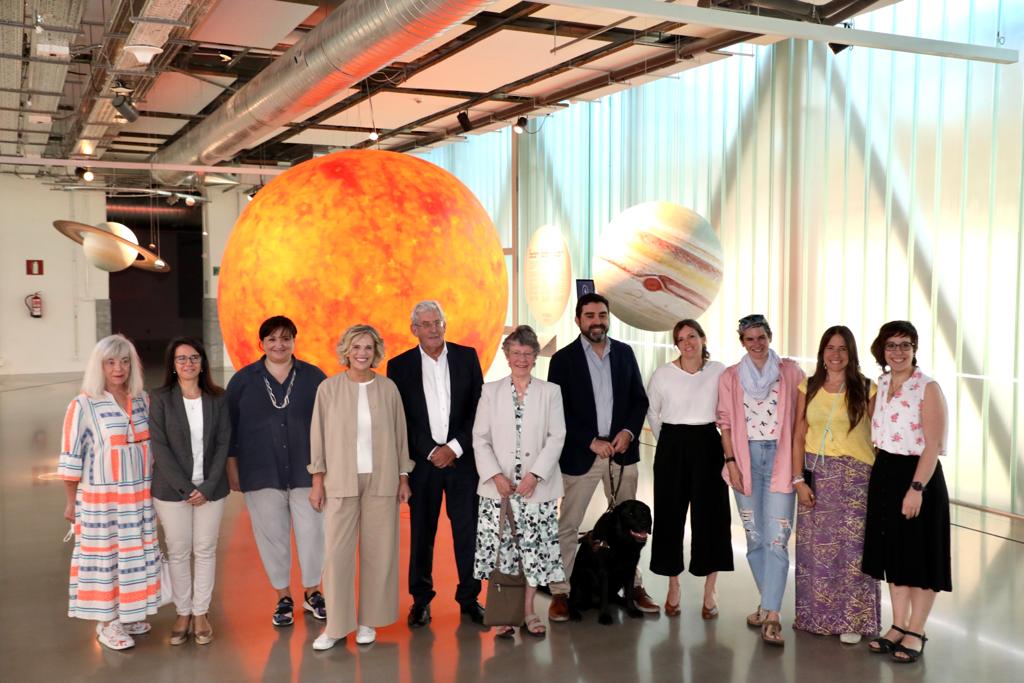
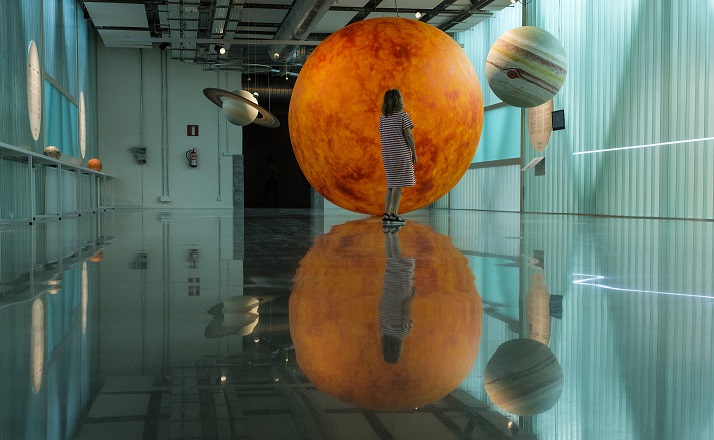
    This year the Passion for Knowledge (P4K) 2023 science festival has an innovative astronomy exhibition that opens the doors to inclusion, with accessible tactile, sound and audiovisual experiences, in which the surface of galaxies and the craters of the Moon can be explored with one’s fingers, or the sounds of the Sun can be listened to. The STROM – Inclusive Astronomy exhibition, conceived and developed by the Donostia International Physics Center (DIPC) in collaboration with Tabakalera, will be open to the public from 4 to 31 October on the third floor of Tabakalera.

    The amazing journey through the Universe of STROM – Inclusive Astronomy begins by exploring our Solar System and ends with a journey through the outermost parts of the known Universe, where the protagonists will be black holes, neutrinos, dark matter and dark energy. Through interactive and multisensory experiences and a layered discourse approach, anyone who comes to the exhibition will be able to learn about everything from basic astronomy concepts to the frontier of research in the field of astrophysics that is being conducted in the Basque Country.

    A primary objective of the exhibition is accessibility, understood as the elimination of as many barriers as possible to enable the participation of people with disabilities, in particular visual, hearing, cognitive and mobility disabilities. To achieve this, podotactile guides have been installed on the floor, there are tactile information panels with accessible text sizes, QRs with access to audio guides designed specifically for the visually impaired, audiovisual sequences with signo-guides, subtitling and magnetic loop, all in an exhibition space without physical barriers.

    The exhibition opened today includes an attractive program of complementary activities geared towards all members of the public. The inclusive hallmark will come with the help of a series of talks and a roundtable discussion organized by the DIPC and Kutxa Fundazioa, designed to promote the participation of people who normally find their access to the dissemination of science limited.

    The full program of complementary activities of the STROM – Inclusive Astronomy exhibition is available at p4k.dipc.org/strom

    The amazing journey through the Universe of STROM – Inclusive Astronomy begins by exploring our Solar System and ends with a journey through the outermost parts of the known Universe, where the protagonists will be black holes, neutrinos, dark matter and dark energy. Through interactive and multisensory experiences and a layered discourse approach, anyone who comes to the exhibition will be able to learn about everything from basic astronomy concepts to the frontier of research in the field of astrophysics that is being conducted in the Basque Country.

    A primary objective of the exhibition is accessibility, understood as the elimination of as many barriers as possible to enable the participation of people with disabilities, in particular visual, hearing, cognitive and mobility disabilities. To achieve this, podotactile guides have been installed on the floor, there are tactile information panels with accessible text sizes, QRs with access to audio guides designed specifically for the visually impaired, audiovisual sequences with signo-guides, subtitling and magnetic loop, all in an exhibition space without physical barriers.

    The exhibition opened today includes an attractive program of complementary activities geared towards all members of the public. The inclusive hallmark will come with the help of a series of talks and a roundtable discussion organized by the DIPC and Kutxa Fundazioa, designed to promote the participation of people who normally find their access to the dissemination of science limited.

    The full program of complementary activities of the STROM – Inclusive Astronomy exhibition is available at p4k.dipc.org/strom

  • Passion for Knowledge 2023 is launched

    Passion for Knowledge 2023 is launched

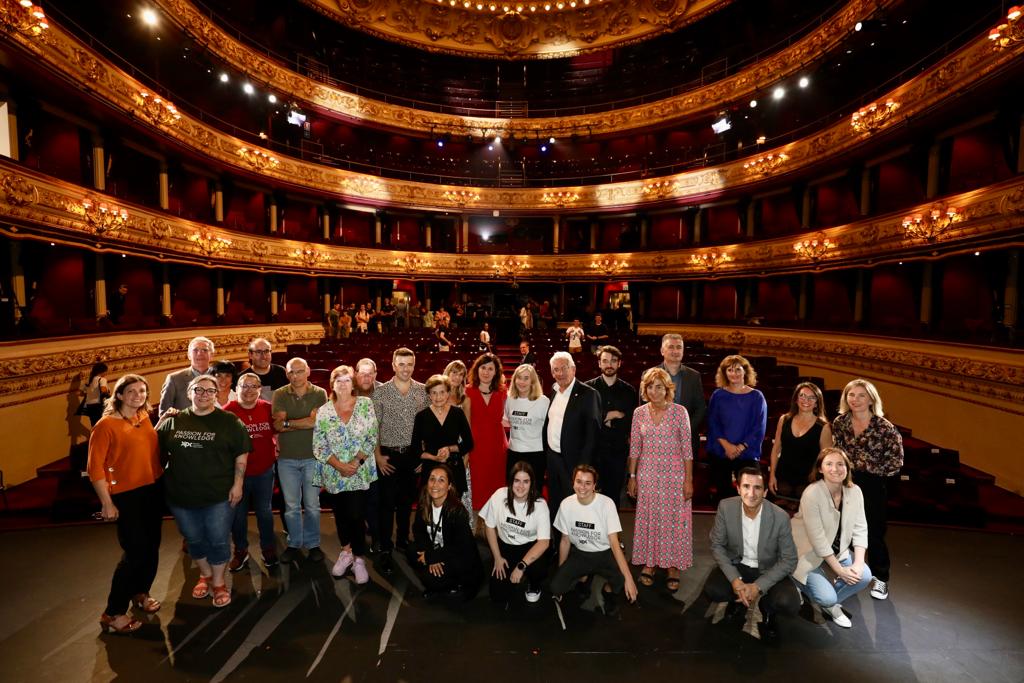
    The Lehendakari (President of the Basque Government) Iñigo Urkullu presided over the opening ceremony of the festival, a celebration of knowledge; he was joined by Eneko Goia, Mayor of Donostia-San Sebastian, Eider Mendoza, Head of the Charter Provincial Council of Gipuzkoa, and Pedro Miguel Etxenike, President of the DIPC. With the participation of seven Nobel Laureates and major figures in science, this international festival will be a week-long meeting point between science and the general public.

    The inauguration began with a performance by the dance company Kukai Dantza. After the ceremony, Özlem Türeci, 2021 Princess of Asturias Award winner and key figure in the race for a vaccine to combat Covid-19, gave a lecture entitled “Molecular communication with the immune system”. After that, Donna Strickland, winner of the 2018 Nobel Prize in Physics for her pioneering research in the field of lasers, spoke about the generation of ultra- short, high-intensity optical pulses. Today’s program concluded with the Ikerbasque awards for researchers Sara Barja, Ainhoa Magrach and Alicia Alonso.

    The inauguration began with a performance by the dance company Kukai Dantza. After the ceremony, Özlem Türeci, 2021 Princess of Asturias Award winner and key figure in the race for a vaccine to combat Covid-19, gave a lecture entitled “Molecular communication with the immune system”. After that, Donna Strickland, winner of the 2018 Nobel Prize in Physics for her pioneering research in the field of lasers, spoke about the generation of ultra- short, high-intensity optical pulses. Today’s program concluded with the Ikerbasque awards for researchers Sara Barja, Ainhoa Magrach and Alicia Alonso.

  • Encounters in Bilbao

    Encounters in Bilbao

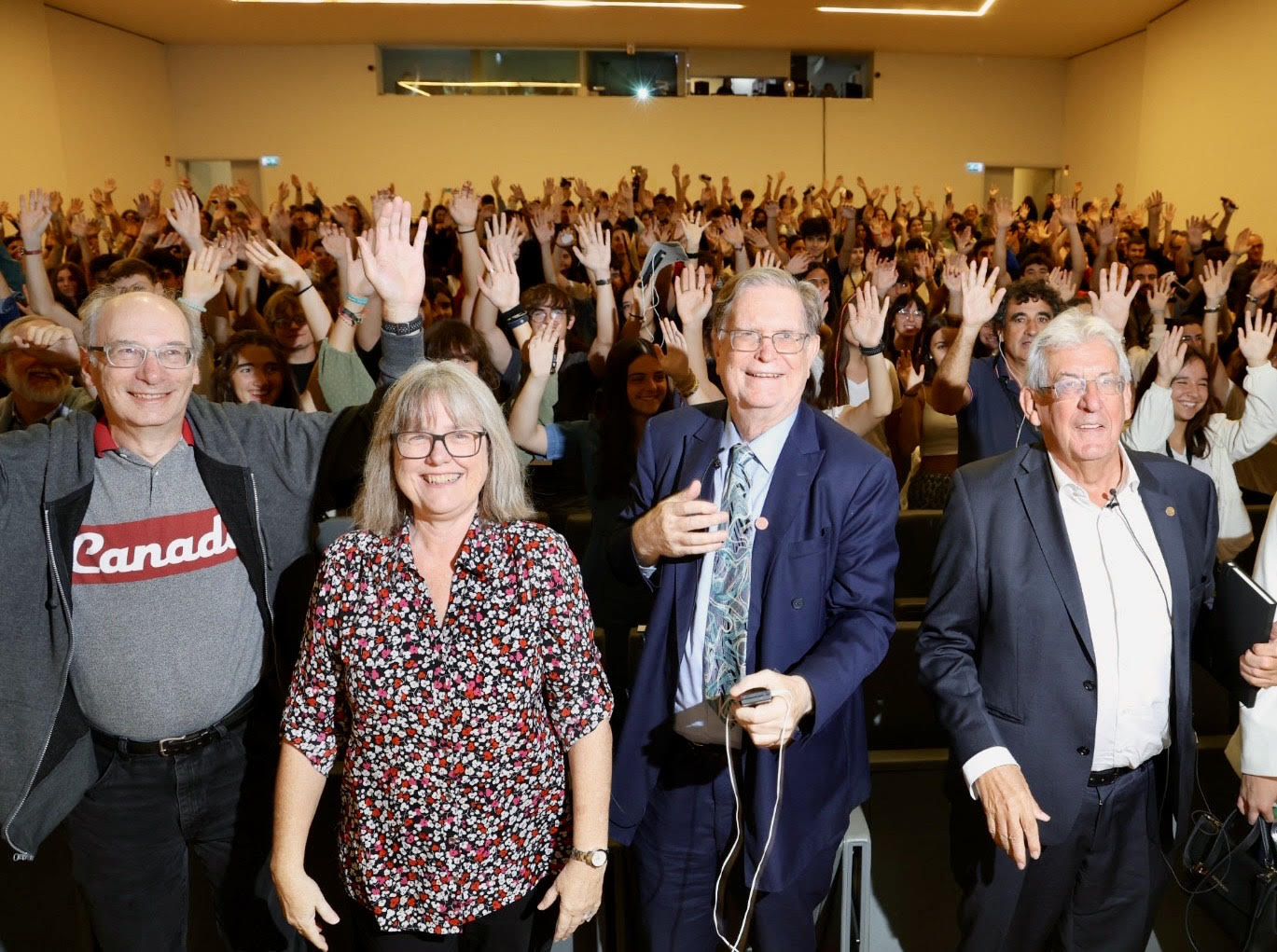
    The 13th top@DIPC – Zientziarekin solasean! Encounters took place today in Bilbao (Bizkaia Aretoa – UPV/EHU). The meeting offered 190 students and 50 teachers from 47 secondary schools the chance to chat with Nobel laureates Donna Strickland and George Smoot in a relaxed, friendly atmosphere, and to ask them questions.

    The main aim of the encounters is to awaken young people’s curiosity in relation to science and to inspire them to pursue a career in this field. To this end, students study the life and work of the scientists they would meet beforehand in class. During the event, all participating schools had the opportunity to ask questions thanks to an entertaining draw system.

    Nobel laureates Donna Strickland and George Smoot talked about their passion for science and research and answered the questions asked by students, sharing details about their lives and experiences throughout the course of their professional careers alongside Pedro Miguel Etxenike who acted as host and chair.

    The main aim of the encounters is to awaken young people’s curiosity in relation to science and to inspire them to pursue a career in this field. To this end, students study the life and work of the scientists they would meet beforehand in class. During the event, all participating schools had the opportunity to ask questions thanks to an entertaining draw system.

    Nobel laureates Donna Strickland and George Smoot talked about their passion for science and research and answered the questions asked by students, sharing details about their lives and experiences throughout the course of their professional careers alongside Pedro Miguel Etxenike who acted as host and chair.

  • The STROM exhibition opens the doors to inclusive astronomy

    The STROM exhibition opens the doors to inclusive astronomy

    This year the Passion for Knowledge (P4K) 2023 science festival has an innovative astronomy exhibition that will be opening the doors to inclusion, with accessible tactile, sound and audiovisual experiences, in which the surface of galaxies and the craters of the Moon can be explored with one’s fingers, or the sounds of the Sun can be listened to. The STROM – Inclusive Astronomy exhibition, conceived and developed by the Donostia International Physics Center (DIPC) in collaboration with Tabakalera, will be open to the public from 4 to 31 October on the third floor of Tabakalera.

    The amazing journey through the Universe of STROM – Inclusive Astronomy begins by exploring our Solar System and ends with a journey through the outermost parts of the known Universe, where the protagonists will be black holes, neutrinos, dark matter and dark energy. Through interactive and multisensory experiences and a layered discourse approach, anyone who comes to the exhibition will be able to learn about everything from basic astronomy concepts to the frontier of research in the field of astrophysics that is being conducted in the Basque Country.

    A primary objective of the exhibition is accessibility, understood as the elimination of as many barriers as possible to enable the participation of people with disabilities, in particular visual, hearing, cognitive and mobility disabilities. To achieve this, podotactile guides have been installed on the floor, there are tactile information panels with accessible text sizes, QRs with access to audio guides designed specifically for the visually impaired, audiovisual sequences with signo-guides, subtitling and magnetic loop, all in an exhibition space without physical barriers.

    The exhibition, which opens on October 4, will include an attractive program of complementary activities geared towards all members of the public. The inclusive hallmark will come with the help of a series of talks and a roundtable discussion organized by the DIPC and Kutxa Fundazioa, designed to promote the participation of people who normally find their access to the dissemination of science limited.

    The series kicks off on Thursday, October 5, at 11:00 hours with Inés Rodríguez-Hidalgo, PhD in astrophysics and director of the Museum of Valladolid, who will give the talk “O Sole mio. A musical invitation to meet the star of your life”. This talk is geared towards the general public and is adapted for people with functional diversity.  On Wednesday, October 18, at 19:00 hours, Amelia Ortiz-Gil, from the Astronomical Observatory of Valencia, will give the talk “The sensory exploration of the universe”, which presents new ways of perceiving the cosmos, through hearing, touch, smell and taste.

    The series concludes with a roundtable discussion entitled “From the cosmic web to the ghost particle: a reflection from art and science about our Universe”, with the participation of DIPC´s Ikerbasque researchers Raúl Angulo and Juan José Gómez-Cadenas, together with the artist Patricia Cancelo, author of an artistic installation inspired by the NEXT project being carried out at the Canfranc Underground Laboratory (LSC), and which can be visited in the exhibition.

    The Citizen Astronomy open group of the Tabakalera Medialab will be organizing the mornings; they will be running guided tours from Tuesday to Friday for schools and groups as well as workshops for families to take place on Saturdays at 11:00 hours throughout October. Registration for these activities can be made via the Tabakalera website.

    In addition, researchers from the DIPC’s cosmology and astrophysics groups will be present at the exhibition every Tuesday and Thursday from 18:30 hours onwards, from October 10 to 26, to answer questions and satisfy the curiosity of those who attend.

    The full program of complementary activities of the STROM – Inclusive Astronomy exhibition is available at p4k.dipc.org/strom

    The STROM – Inclusive Astronomy exhibition has been possible thanks to the collaboration of various institutions and individuals who have spent years working to bring astronomy closer to people with disabilities, especially the visually impaired. Among the collaborations are the tactile model of planetary formation developed by the Millennium Nucleus for Planetary Formation (NPF); the tactile models of the solar system developed by the Planetarium of Medellín together with the Giant Magellan Telescope (GMTO); the sounds of the Sun produced by the Institute for Astrophysical Studies of the Diego Portales University (UDP); and the 3D galaxies of the AstroBVI project, funded with the support of the Regional Ministry for Universities, Research and Innovation of the Regional Government of Andalusia and the International Astronomical Union. The company Morgancrea has handled the design and production of the exhibition, while the curatorship has been in the hands of the DIPC officer for communications and outreach Valentina Rodriguez and DIPC Ikerbasque astronomer Dr Silvia Bonoli.

    The exhibition has been conceived as a travelling exhibition with the intention of travelling throughout the country and abroad. The Museum of Valladolid has already confirmed its interest in hosting this exhibition in its main hall from July 2025 onwards.

    The amazing journey through the Universe of STROM – Inclusive Astronomy begins by exploring our Solar System and ends with a journey through the outermost parts of the known Universe, where the protagonists will be black holes, neutrinos, dark matter and dark energy. Through interactive and multisensory experiences and a layered discourse approach, anyone who comes to the exhibition will be able to learn about everything from basic astronomy concepts to the frontier of research in the field of astrophysics that is being conducted in the Basque Country.

    A primary objective of the exhibition is accessibility, understood as the elimination of as many barriers as possible to enable the participation of people with disabilities, in particular visual, hearing, cognitive and mobility disabilities. To achieve this, podotactile guides have been installed on the floor, there are tactile information panels with accessible text sizes, QRs with access to audio guides designed specifically for the visually impaired, audiovisual sequences with signo-guides, subtitling and magnetic loop, all in an exhibition space without physical barriers.

    The exhibition, which opens on October 4, will include an attractive program of complementary activities geared towards all members of the public. The inclusive hallmark will come with the help of a series of talks and a roundtable discussion organized by the DIPC and Kutxa Fundazioa, designed to promote the participation of people who normally find their access to the dissemination of science limited.

    The series kicks off on Thursday, October 5, at 11:00 hours with Inés Rodríguez-Hidalgo, PhD in astrophysics and director of the Museum of Valladolid, who will give the talk “O Sole mio. A musical invitation to meet the star of your life”. This talk is geared towards the general public and is adapted for people with functional diversity.  On Wednesday, October 18, at 19:00 hours, Amelia Ortiz-Gil, from the Astronomical Observatory of Valencia, will give the talk “The sensory exploration of the universe”, which presents new ways of perceiving the cosmos, through hearing, touch, smell and taste.

    The series concludes with a roundtable discussion entitled “From the cosmic web to the ghost particle: a reflection from art and science about our Universe”, with the participation of DIPC´s Ikerbasque researchers Raúl Angulo and Juan José Gómez-Cadenas, together with the artist Patricia Cancelo, author of an artistic installation inspired by the NEXT project being carried out at the Canfranc Underground Laboratory (LSC), and which can be visited in the exhibition.

    The Citizen Astronomy open group of the Tabakalera Medialab will be organizing the mornings; they will be running guided tours from Tuesday to Friday for schools and groups as well as workshops for families to take place on Saturdays at 11:00 hours throughout October. Registration for these activities can be made via the Tabakalera website.

    In addition, researchers from the DIPC’s cosmology and astrophysics groups will be present at the exhibition every Tuesday and Thursday from 18:30 hours onwards, from October 10 to 26, to answer questions and satisfy the curiosity of those who attend.

    The full program of complementary activities of the STROM – Inclusive Astronomy exhibition is available at p4k.dipc.org/strom

    The STROM – Inclusive Astronomy exhibition has been possible thanks to the collaboration of various institutions and individuals who have spent years working to bring astronomy closer to people with disabilities, especially the visually impaired. Among the collaborations are the tactile model of planetary formation developed by the Millennium Nucleus for Planetary Formation (NPF); the tactile models of the solar system developed by the Planetarium of Medellín together with the Giant Magellan Telescope (GMTO); the sounds of the Sun produced by the Institute for Astrophysical Studies of the Diego Portales University (UDP); and the 3D galaxies of the AstroBVI project, funded with the support of the Regional Ministry for Universities, Research and Innovation of the Regional Government of Andalusia and the International Astronomical Union. The company Morgancrea has handled the design and production of the exhibition, while the curatorship has been in the hands of the DIPC officer for communications and outreach Valentina Rodriguez and DIPC Ikerbasque astronomer Dr Silvia Bonoli.

    The exhibition has been conceived as a travelling exhibition with the intention of travelling throughout the country and abroad. The Museum of Valladolid has already confirmed its interest in hosting this exhibition in its main hall from July 2025 onwards.

  • Passion for Knowledge is back with a bang

    Passion for Knowledge is back with a bang

    Organised by the Donostia International Physics Center (DIPC), the Passion for Knowledge (P4K) 2023 science festival will be attended by eight Nobel Prize winners and a great cast of prestigious international scientists who have led some of the most significant discoveries in recent decades. A luxury within everyone’s reach and which aims to celebrate in style every step that science has taken for the benefit of humanity.

    The Passion for Knowledge festival arrives with a fresh image and an extensive programme of activities aimed at all audiences. Science will be dressing up in style to share its latest findings with the general public in a new edition of the festival that will take place in Donostia-San Sebastian, Bilbao and other locations from October 2 to 7.

    Passion for Knowledge sets out to promote science as a key cultural activity to contribute to the well-being of the future generations and to highlight knowledge as the driving force of scientific, technological and cultural progress. The programme is complemented by a whole series of activities geared towards various audiences: large gatherings with secondary school students, informative sessions for young researchers, exhibitions, children’s workshops, shows, sessions with bertsolaris (extempore Basque verse makers), popularization with Naukas collaborators and streamers, projections, and much more.

    The plenary lectures, which will be taking place during the afternoons at the festival’s main venue, the Victoria Eugenia Theatre, are the hallmark of the festival’s extensive programme. Guided by various Nobel laureates and prestigious international figures from a range of scientific disciplines, members of the public will be able to get a closer look at such widely varying subjects, such as quantum physics, chemistry, smart biomaterials, botany and biotechnology. This year’s guests include Özlem Türeci, key player in the race for the Covid-19 vaccine; Didier Queloz (Nobel Prize in Physics in 2019), discoverer of the first exoplanet; Jean-Pierre Sauvage (Nobel Prize in Chemistry in 2016), designer of molecular machines; Donna Strickland, Nobel Prize in Physics in 2018 for her pioneering research in the field of lasers; Dario Gil, Vice-President of IBM and Director of IBM Research where the world’s largest research laboratory in quantum computing operates; and Jocelyn Bell-Burnell, the discoverer of pulsars. A luxury within everyone’s reach, with additional special sessions at the Euskalduna Conference Centre and the CAF company in Beasain.

    In line with what has also become a tradition, the Victoria Eugenia Theatre will also be the venue for enjoying the Bertso Passion show, which brings together leading exponents of bertsolaritza, such as Maialen Lujanbio, Amets Arzallus, Nerea Ibarzabal and Andoni Egaña; or the well-known Naukas Passion sessions, in which various personalities in science communication and popularisation at a national level will be taking part. The festival will also be welcoming a new format this year with the Streamers Sessions in which the best national streamers of scientific content will be taking to the stage to share their knowledge on the latest developments relating to various scientific and technological issues.

    In this new edition of the festival the huge Gatherings involving secondary school and sixth form students and leading researchers will also be held in Donostia-San Sebastian and Bilbao, with the participation of 5 Nobel Laureates. The main mission of the gatherings is to awaken a curiosity for science among young people and to inspire scientific vocations with a particular emphasis on women. The Gatherings are supported by Telefónica, EDP and the University of the Basque Country (UPV/EHU). A unique opportunity enabling the passion for knowledge to drench young students. To participate in these Gatherings schools need to reserve their place before 8 September via the festival website: p4k.dipc.org/en/inscripciones- encuentros.

    What is more, ‘STROM – Inclusive Astronomy‘ will be inaugurated within the framework of the festival; this is an innovative astronomy exhibition that will be opening the doors to inclusion, with accessible tactile, sound and audiovisual experiences, in which the surface of galaxies and the craters of the Moon can be explored with one’s fingers, or the sounds of the Sun can be listened to. The exhibition, conceived and developed by the DIPC in collaboration with Tabakalera for the Passion for Knowledge festival, will be open to the public from 4 to 31 October on the third floor of Tabakalera.

    In addition, over the weekend the Sala Club of the Victoria Eugenia Theatre will be hosting Passion Txiki, a mini science festival for kids that will include workshops on experiments, scientific storytelling, games, etc. made possible by the collaboration of the Kutxa Fundazioa.

    Passion for Knowledge 2023 is possible thanks to the ongoing support of the DIPC’s patrons: the Basque Government –through the Department of Education, and Department of Economic Development and Competitiveness–, the Chartered Provincial Council of Gipuzkoa, the University of the Basque Country (UPV/EHU), Donostia-San Sebastian City Council, Kutxa Fundazioa, Telefónica, EDP and CAF, as well as specific funding from the Basque Government’s Department of Education and Innovation Fund.

    Pedro Miguel Etxenike highlighted the idea that has always guided the DIPC: “Science as a cultural value and transforming seed”, stressing the need for critical thinking in times of information overload and fake news. When inviting everyone to take part in this festival of knowledge, the DIPC’s chairman quoted Hypatia in his speech: “Reserve your right to think, for even to think wrongly is better than not to think at all.”

    Ricardo Díez-Muiño, the DIPC’s director, was keen to emphasise that “Donostia-San Sebastian is a city of science and knowledge, home to world-class research institutions. In this context, a festival as unique as Passion for Knowledge is a natural extension of this activity to the general public, an opportunity to share the fascination for knowledge among all of us. Festivals like ours are difficult to come by across the world.”

    To conclude the presentation, Jokin Bildarratz, Minister of Education of the Basque Government, pointed out that “for the Basque Government and the Department of Education, science, technology and innovation policy is a priority and it is so, fundamentally, because it is also a priority for Basque society. Knowledge is a public asset belonging to everyone, extending it is a matter of public interest and disseminating it is the best way to democratise it. In this sense, the Passion for Knowledge science festival is a luxury, it gives us the opportunity to offer different activities to students, teachers and parents”.

    All the activities scheduled during the festival will be free of charge. An interpreting service into Basque, Spanish and English will be available. The main sessions taking place at the Victoria Eugenia Theatre will be streamed live via the festival’s website and via eitb.eus on its Kosmos portal dedicated to popularisation, science, knowledge and technology. The sessions will also be broadcast live on the EITB’s YouTube channel and once the event is over, they can be watched in the Kosmos section of the Euskal Irrati Telebista website eitb.eus, and on its Nahieran portal, which allows content to be enjoyed on demand, whenever and wherever one wishes.

    Anyone wishing to participate in the various activities of Passion for Knowledge (P4K) 2023 is advised to register and reserve a place via the festival website: p4k.dipc.org Registration for the public activities at the Victoria Eugenia Theatre (with single-day registration) and in Bilbao is now open. Registrations for Passion Txiki will open at 10:00 on 7 September.

    To get all the latest news, sign up for the festival newsletter: newsletter

    The Passion for Knowledge festival arrives with a fresh image and an extensive programme of activities aimed at all audiences. Science will be dressing up in style to share its latest findings with the general public in a new edition of the festival that will take place in Donostia-San Sebastian, Bilbao and other locations from October 2 to 7.

    Passion for Knowledge sets out to promote science as a key cultural activity to contribute to the well-being of the future generations and to highlight knowledge as the driving force of scientific, technological and cultural progress. The programme is complemented by a whole series of activities geared towards various audiences: large gatherings with secondary school students, informative sessions for young researchers, exhibitions, children’s workshops, shows, sessions with bertsolaris (extempore Basque verse makers), popularization with Naukas collaborators and streamers, projections, and much more.

    The plenary lectures, which will be taking place during the afternoons at the festival’s main venue, the Victoria Eugenia Theatre, are the hallmark of the festival’s extensive programme. Guided by various Nobel laureates and prestigious international figures from a range of scientific disciplines, members of the public will be able to get a closer look at such widely varying subjects, such as quantum physics, chemistry, smart biomaterials, botany and biotechnology. This year’s guests include Özlem Türeci, key player in the race for the Covid-19 vaccine; Didier Queloz (Nobel Prize in Physics in 2019), discoverer of the first exoplanet; Jean-Pierre Sauvage (Nobel Prize in Chemistry in 2016), designer of molecular machines; Donna Strickland, Nobel Prize in Physics in 2018 for her pioneering research in the field of lasers; Dario Gil, Vice-President of IBM and Director of IBM Research where the world’s largest research laboratory in quantum computing operates; and Jocelyn Bell-Burnell, the discoverer of pulsars. A luxury within everyone’s reach, with additional special sessions at the Euskalduna Conference Centre and the CAF company in Beasain.

    In line with what has also become a tradition, the Victoria Eugenia Theatre will also be the venue for enjoying the Bertso Passion show, which brings together leading exponents of bertsolaritza, such as Maialen Lujanbio, Amets Arzallus, Nerea Ibarzabal and Andoni Egaña; or the well-known Naukas Passion sessions, in which various personalities in science communication and popularisation at a national level will be taking part. The festival will also be welcoming a new format this year with the Streamers Sessions in which the best national streamers of scientific content will be taking to the stage to share their knowledge on the latest developments relating to various scientific and technological issues.

    In this new edition of the festival the huge Gatherings involving secondary school and sixth form students and leading researchers will also be held in Donostia-San Sebastian and Bilbao, with the participation of 5 Nobel Laureates. The main mission of the gatherings is to awaken a curiosity for science among young people and to inspire scientific vocations with a particular emphasis on women. The Gatherings are supported by Telefónica, EDP and the University of the Basque Country (UPV/EHU). A unique opportunity enabling the passion for knowledge to drench young students. To participate in these Gatherings schools need to reserve their place before 8 September via the festival website: p4k.dipc.org/en/inscripciones- encuentros.

    What is more, ‘STROM – Inclusive Astronomy‘ will be inaugurated within the framework of the festival; this is an innovative astronomy exhibition that will be opening the doors to inclusion, with accessible tactile, sound and audiovisual experiences, in which the surface of galaxies and the craters of the Moon can be explored with one’s fingers, or the sounds of the Sun can be listened to. The exhibition, conceived and developed by the DIPC in collaboration with Tabakalera for the Passion for Knowledge festival, will be open to the public from 4 to 31 October on the third floor of Tabakalera.

    In addition, over the weekend the Sala Club of the Victoria Eugenia Theatre will be hosting Passion Txiki, a mini science festival for kids that will include workshops on experiments, scientific storytelling, games, etc. made possible by the collaboration of the Kutxa Fundazioa.

    Passion for Knowledge 2023 is possible thanks to the ongoing support of the DIPC’s patrons: the Basque Government –through the Department of Education, and Department of Economic Development and Competitiveness–, the Chartered Provincial Council of Gipuzkoa, the University of the Basque Country (UPV/EHU), Donostia-San Sebastian City Council, Kutxa Fundazioa, Telefónica, EDP and CAF, as well as specific funding from the Basque Government’s Department of Education and Innovation Fund.

    Pedro Miguel Etxenike highlighted the idea that has always guided the DIPC: “Science as a cultural value and transforming seed”, stressing the need for critical thinking in times of information overload and fake news. When inviting everyone to take part in this festival of knowledge, the DIPC’s chairman quoted Hypatia in his speech: “Reserve your right to think, for even to think wrongly is better than not to think at all.”

    Ricardo Díez-Muiño, the DIPC’s director, was keen to emphasise that “Donostia-San Sebastian is a city of science and knowledge, home to world-class research institutions. In this context, a festival as unique as Passion for Knowledge is a natural extension of this activity to the general public, an opportunity to share the fascination for knowledge among all of us. Festivals like ours are difficult to come by across the world.”

    To conclude the presentation, Jokin Bildarratz, Minister of Education of the Basque Government, pointed out that “for the Basque Government and the Department of Education, science, technology and innovation policy is a priority and it is so, fundamentally, because it is also a priority for Basque society. Knowledge is a public asset belonging to everyone, extending it is a matter of public interest and disseminating it is the best way to democratise it. In this sense, the Passion for Knowledge science festival is a luxury, it gives us the opportunity to offer different activities to students, teachers and parents”.

    All the activities scheduled during the festival will be free of charge. An interpreting service into Basque, Spanish and English will be available. The main sessions taking place at the Victoria Eugenia Theatre will be streamed live via the festival’s website and via eitb.eus on its Kosmos portal dedicated to popularisation, science, knowledge and technology. The sessions will also be broadcast live on the EITB’s YouTube channel and once the event is over, they can be watched in the Kosmos section of the Euskal Irrati Telebista website eitb.eus, and on its Nahieran portal, which allows content to be enjoyed on demand, whenever and wherever one wishes.

    Anyone wishing to participate in the various activities of Passion for Knowledge (P4K) 2023 is advised to register and reserve a place via the festival website: p4k.dipc.org Registration for the public activities at the Victoria Eugenia Theatre (with single-day registration) and in Bilbao is now open. Registrations for Passion Txiki will open at 10:00 on 7 September.

    To get all the latest news, sign up for the festival newsletter: newsletter

    To get all the latest news, sign up for the festival newsletter: newsletter

    To get all the latest news, sign up for the festival newsletter: newsletter

  • Opening of registrations for Educational Centers

    Opening of registrations for Educational Centers

    One of the star attractions of the Passion for Knowledge festival is the massive encounters between students and Nobel Laureates, known as top@DIPC – Zientziarekin solasean!, geared towards all schools across the Basque Country. The main mission of the encounters is to awaken a curiosity for science among young people and to inspire scientific vocations with particular emphasis on women.

    Organized in the framework of the festival, the encounters will take place on October 6 in Donostia/San Sebastian —Victoria Eugenia Theatre— and on October 3 in Bilbao —Bizkaia Aretoa, UPV/EHU —.Each encounter will be attended by internationally renowned researchers in a range of fields who have been selected from the panel of guests invited to Passion for Knowledge 2023, together with Pedro Miguel Etxenike, who will act as the moderator of each gathering.

    In Donostia/San Sebastian secondary and sixth form students and teachers will be getting together with; María Vallet-Regí, 2018 Rey Jaime I Award for her pioneering contributions in the field of bone regeneration and controlled drug release systems, Jack Szostak, Nobel Prize in Medicine in 2009 for discovering how repetitive strands of DNA, known as telomeres, protect our chromosomes together with the enzyme telomerase and Jean-Marie Lehn Nobel Prize for Chemistry in 1987, for his studies on the chemical basis of ‘molecular recognition’ which also plays a fundamental role in biological processes.

    In Bilbao secondary and sixth form students will be getting together with Donna Strickland, Nobel Prize in Physics in 2018 and pioneer in the field of lasers, a reference among women scientists as one of only four women in history to receive the Nobel Prize in physics; George Smoot American physicist who was awarded the Nobel Prize in Physics in 2006, for the discovery of the black body form and the anisotropy of cosmic microwave background radiation.

    This is just a small preview of the extraordinary panel of scientists invited to the festival.

    In a relaxed, friendly atmosphere, students will have the chance to chat to major figures in science and to raise their doubts and questions directly with them. The deadline for registration via the festival website p4k.dipc.org for all schools in the Basque Country will be September 8.

    Details of the attractive program of activities and the panel of guests invited to the 2023 edition of Passion for Knowledge will soon be posted on the festival’s website: p4k.dipc.org

    All the information about the event and the conditions of participation can be found in the encounters section of the website.

    Organized in the framework of the festival, the encounters will take place on October 6 in Donostia/San Sebastian —Victoria Eugenia Theatre— and on October 3 in Bilbao —Bizkaia Aretoa, UPV/EHU —.Each encounter will be attended by internationally renowned researchers in a range of fields who have been selected from the panel of guests invited to Passion for Knowledge 2023, together with Pedro Miguel Etxenike, who will act as the moderator of each gathering.

    In Donostia/San Sebastian secondary and sixth form students and teachers will be getting together with; María Vallet-Regí, 2018 Rey Jaime I Award for her pioneering contributions in the field of bone regeneration and controlled drug release systems, Jack Szostak, Nobel Prize in Medicine in 2009 for discovering how repetitive strands of DNA, known as telomeres, protect our chromosomes together with the enzyme telomerase and Jean-Marie Lehn Nobel Prize for Chemistry in 1987, for his studies on the chemical basis of ‘molecular recognition’ which also plays a fundamental role in biological processes.

    In Bilbao secondary and sixth form students will be getting together with Donna Strickland, Nobel Prize in Physics in 2018 and pioneer in the field of lasers, a reference among women scientists as one of only four women in history to receive the Nobel Prize in physics; George Smoot American physicist who was awarded the Nobel Prize in Physics in 2006, for the discovery of the black body form and the anisotropy of cosmic microwave background radiation.

    This is just a small preview of the extraordinary panel of scientists invited to the festival.

    In a relaxed, friendly atmosphere, students will have the chance to chat to major figures in science and to raise their doubts and questions directly with them. The deadline for registration via the festival website p4k.dipc.org for all schools in the Basque Country will be September 8.

    Details of the attractive program of activities and the panel of guests invited to the 2023 edition of Passion for Knowledge will soon be posted on the festival’s website: p4k.dipc.org

    All the information about the event and the conditions of participation can be found in the encounters section of the website.